

In short: The minimum kit is scales, a dough scraper, a proving basket, a lame for scoring and either a cast-iron pot or a baking stone. Everything else makes the work easier, but without these five, hearth bread will not happen.
Why equipment matters here
Baking bread is a remarkable craft that needs specific tools to produce quality and flavour. The equipment plays a decisive role in the process and shows directly in the finished loaf.
Scales
Non-negotiable. Bread is worked in percentages of flour weight, and volume measurement makes those percentages meaningless.
Dough scraper
A plastic scraper for the bowl and a metal one for the bench. Wet dough is handled with a scraper, not with hands, and this single cheap tool changes how manageable high-hydration dough feels.
Proving basket
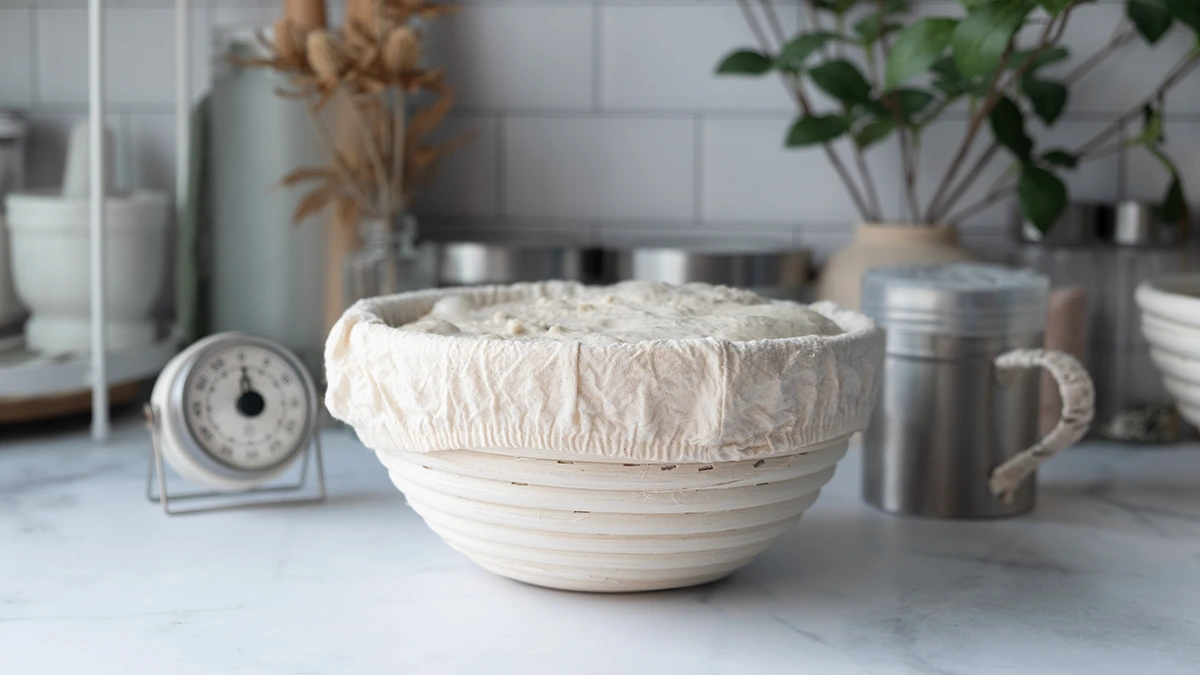
A banneton supports the shaped loaf during its final prove. A colander or bowl lined with a linen cloth dusted with rice flour does the same job — rice flour absorbs less moisture, so the dough does not stick.
Lame
A blade for scoring. A very sharp knife works; a blunt one drags the dough and the score will not open.
Cast-iron pot or baking stone
A lidded cast-iron pot gives both heat and steam, and the result is often better than a stone used without any steam at all. If you buy one thing beyond the basics, buy this.
Frequently asked questions
Can I manage without a proving basket
Yes: a colander or bowl lined with linen and dusted with rice flour, which absorbs less moisture than wheat.
What can replace a baking stone
A lidded cast-iron pot. It provides heat and steam together, and frequently outperforms a stone used without steam.
What should I score bread with
A lame or a very sharp knife. A blunt blade drags the dough and the score stays closed.