

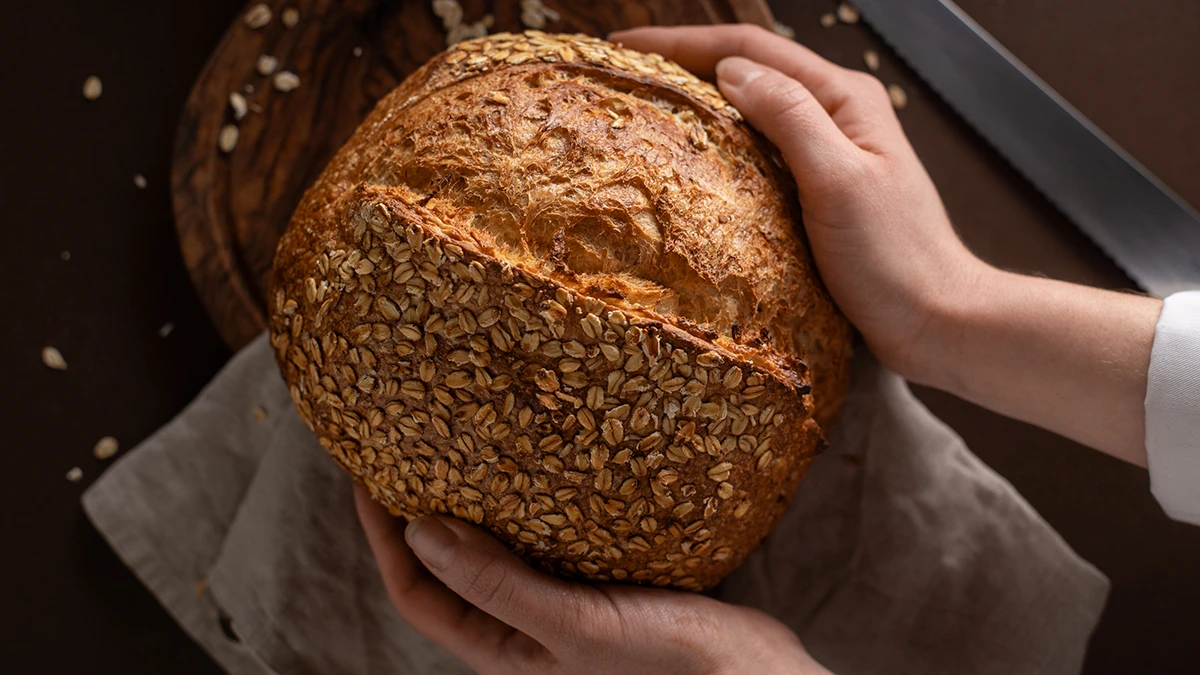
In short: Sourdough differs from yeasted bread in the length of its fermentation. Over those hours part of the phytic acid is broken down, minerals become more available, and the crumb stays fresh longer without improvers.
Why the interest
More people are paying attention to what they eat and looking for a more balanced diet, and with that has come interest in natural products such as sourdough bread. It is not simply a trend — the difference from industrial bread is real and it is measurable.
What long fermentation does
Sourdough works slowly. Wild yeasts and lactic acid bacteria ferment the dough over hours rather than minutes, and during that time several things happen: part of the phytic acid that binds minerals is broken down, some of the starch and protein is partly pre-digested, and organic acids accumulate.
Those acids are also what keeps the loaf from moulding, which is why sourdough stays edible for days without a single preservative.
What it does not do
Sourdough is not gluten-free. Long fermentation breaks down some of the proteins, but the gluten remains, and for anyone with coeliac disease the bread is still off limits.
Frequently asked questions
How does sourdough differ from yeasted bread
In the length and nature of fermentation. Sourdough uses wild yeast and lactic bacteria working over hours, and the flavour develops without additives.
Is sourdough safe for gluten intolerance
No. Fermentation breaks down some proteins, but gluten remains and coeliac disease still rules it out.
Does sourdough keep longer
Yes. The acidic environment slows mould, so the loaf stays good for several days without preservatives.