

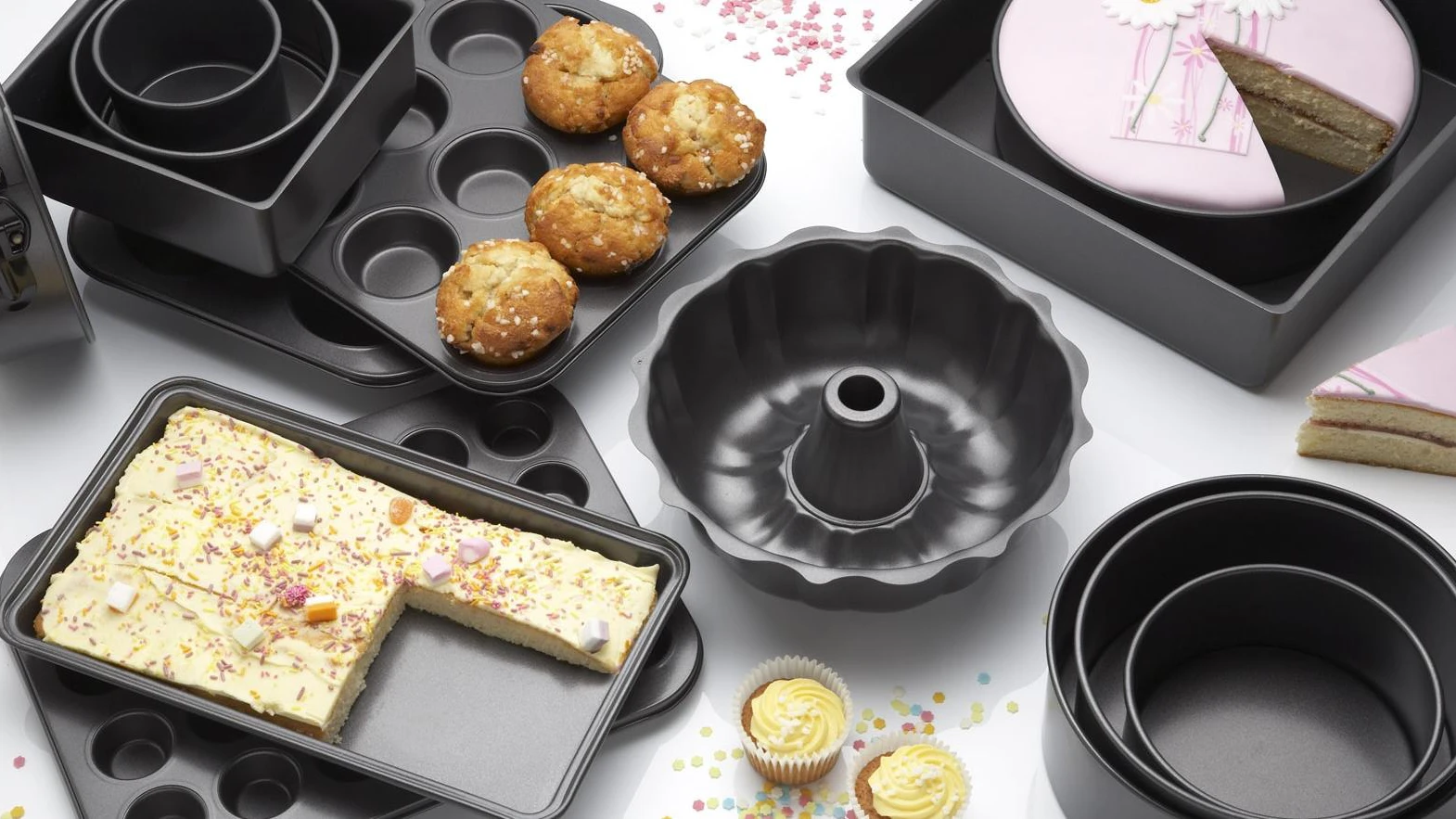
In short: Tins are distinguished by geometry — round, square, rectangular, shaped — and by material: metal, silicone, glass and ceramic. The material decides how quickly the base heats and what kind of crust you end up with.
Choosing well matters
Pastry is not only about cooking well but about choosing the right equipment. Baking tins come in many types, each with its own characteristics and advantages, and the choice affects the result more than most people expect.
By shape
Round is the most common and the default for cakes. Rectangular and square tins suit loaf cakes and traybakes. Shaped tins — bundt and figured — look impressive but are demanding: batter has to release cleanly from every crevice.
Metal
Conducts heat quickly and gives a defined, browned crust. Springform tins let you release a cake without turning it out; rings give the cleanest sides of all because there is no seam.
Silicone
Releases easily and needs no greasing, but conducts heat poorly: sides and base stay pale. Excellent for freezing and for mousse work, weaker for anything that should colour.
Glass and ceramic
Heat slowly and hold heat for a long time. That suits slow bakes and dishes served in the vessel, but it means adjusting time and often temperature relative to a metal tin.
Do you grease it
Metal, yes — grease or line it. Silicone and non-stick usually not, though a sponge benefits from having something to climb at the sides.
Frequently asked questions
Which tin is best for sponge
A metal springform or a ring: even sides, and the collar comes away without turning the cake over.
Can I bake in a silicone tin
For mousse desserts and freezing, yes. For sponge it is worse — silicone conducts heat poorly and the sides stay pale.
Do I need to grease the tin
Metal, yes, or line it. Silicone and non-stick usually not.