

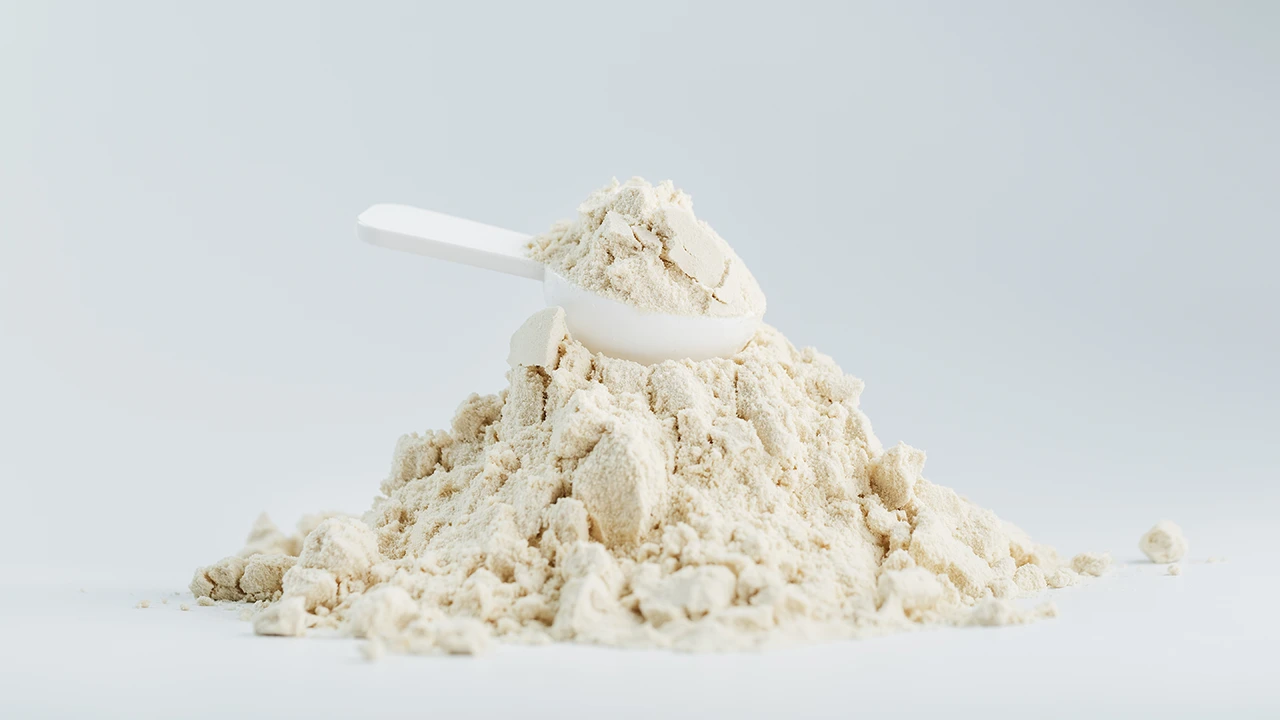
In short: Albumen is egg white that has been pasteurised and dried. It replaces raw white in desserts that never get cooked through — meringue, marshmallow and royal icing — and removes the risk that comes with unpasteurised eggs.
Why raw egg white is a problem
Desserts such as meringue, gingerbread icing and marshmallow are traditionally made with unpasteurised eggs. Those eggs can carry bacteria that pass through the shell and cause serious food poisoning and allergic reactions. Pastry chefs therefore try to minimise raw egg in their work, and albumen is the usual replacement.
What albumen is
Albumen is egg white that has been heat-treated. The treatment preserves its nutritional properties while making it safe to use without further cooking. In powdered form it also keeps far longer than fresh white and takes up almost no space.
How to use it
The powder is rehydrated with water in the proportion given on the pack and left to stand: the protein needs time to swell before it will whip properly. Rushing this step is the usual reason a whip refuses to hold.
In practice albumen often whips into a more stable foam than fresh white, which is why it turns up in production work as well as in home baking.
Frequently asked questions
Why use albumen when fresh eggs are available
Because a raw egg may carry bacteria that entered through the shell. In desserts with no heat treatment — meringue, marshmallow, royal icing — that is a real risk.
How do I rehydrate powdered egg white
With water in the ratio given on the pack, then leave it to stand. The protein needs time to swell before whipping.
Does albumen affect the flavour
Not at working quantities. It usually gives an even more stable foam than fresh white.