

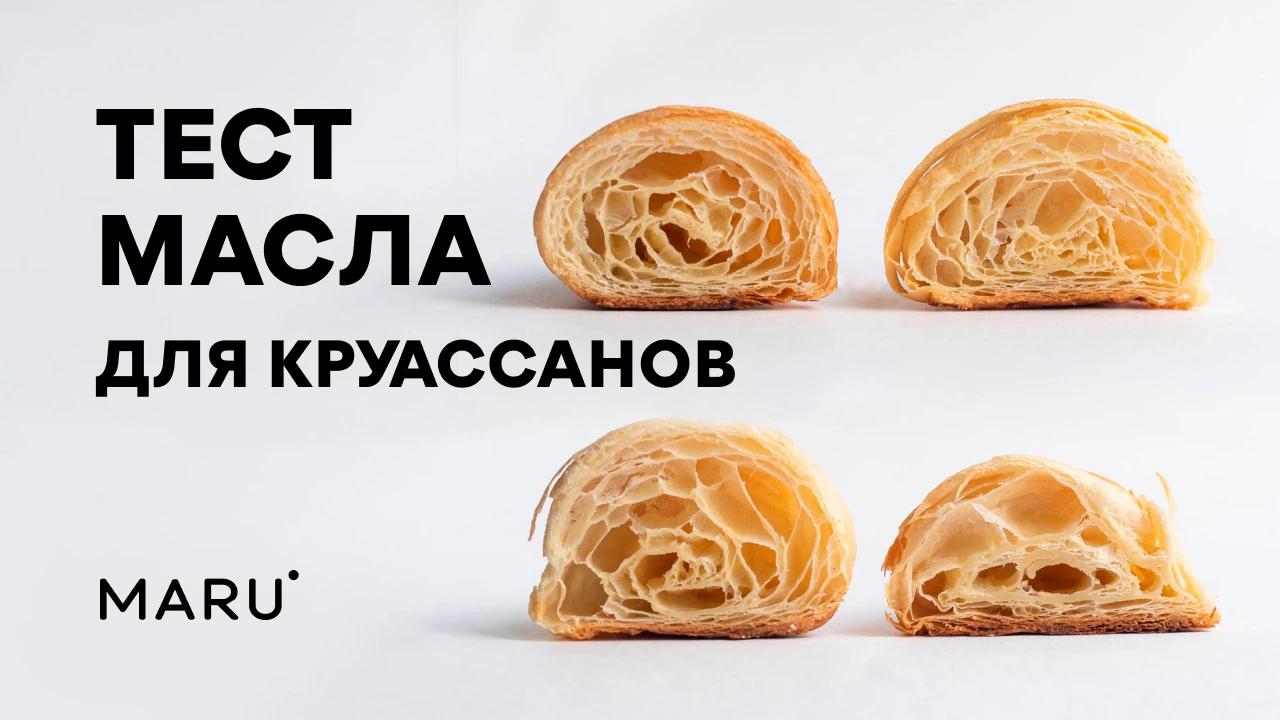
In short: Four brands of 82 % butter tested in the same croissant dough: how each behaved during rolling, what it did to the layers, the aroma and the finished bake. This is our own experiment, not a summary of someone else’s.
Why butter decides so much
Making croissants depends not only on technique and the baker’s skill but on choosing the right butter. It determines the plasticity of the dough, how open the layers become, the aroma and the final result.
The test
Four brands of butter at 82 % fat were put through an identical dough, with everything else held constant: the same flour, the same yeast, the same number of folds, the same proving temperature and the same oven programme. Only the butter changed.
What was assessed
Four things: how the butter behaved under the rolling pin, whether the layers stayed intact, how much the pieces grew during proving, and what the crumb looked like in section.
Why fat content is the first filter
Anything below 82 % means more water, and water in the butter layer turns to steam in the wrong place and tears the lamination. That is why the test used a single fat content throughout — comparing 82 % against 72 % would have told you nothing about the brands.
The results
The behaviour of each brand during lamination and the finished croissants are shown in the video above.
Frequently asked questions
What butter fat content do croissants need
From 82 %. Lower means more water, and the layers tear during lamination.
Is butter more important than technique
Not more important, but the plasticity of the butter has to match the plasticity of the dough. The wrong butter tears the layers even with good technique.
Can I use butter straight from the freezer
No. Bring it to a pliable state, around 14–16 °C: cold butter shatters and punches through the dough.