

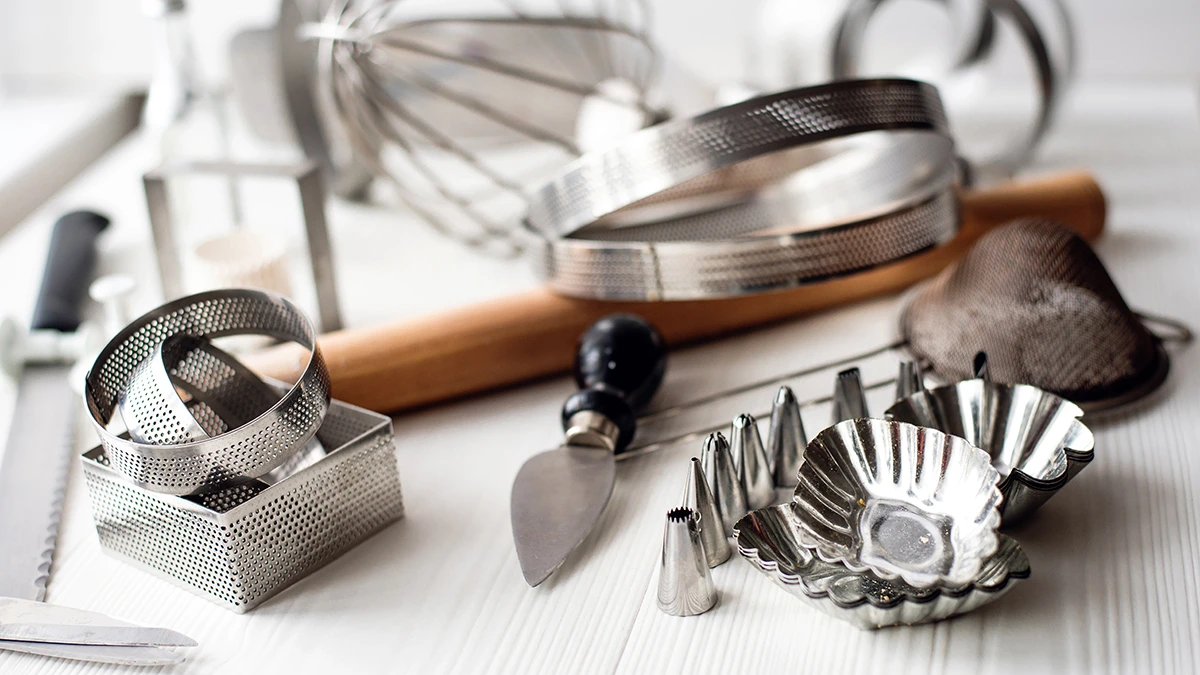
In short: Tins differ by material — metal, silicone, perforated — and by the type of case used with them. Metal gives a browned crust, silicone heats more gently, and perforation helps the base bake through.
Choosing among too many options
Shops now stock a large number of baking tins in different shapes and materials. Working out which of them you actually need is the first problem, and material matters more than shape.
What each is for
Cupcakes are essentially miniature cakes: a base with frosting piped on top, which means the case has to hold its shape while the frosting is added.
Muffins carry no frosting and have a denser crumb, so the tin only has to bake them evenly.
Metal tins
Conduct heat well and give a browned, defined crust. They need lining with paper cases or greasing, since batter sticks to bare metal.
Silicone tins
Release easily and need no cases, but silicone is a poor conductor: the sides and base stay noticeably paler. Convenient for freezing and for shaped bakes, less good for anything that should brown.
Perforated tins
Holes in the base let heat reach it directly, which is the fix for pale, damp bottoms. Worth having if that is a recurring problem in your oven.
Frequently asked questions
Do I need paper cases
In a metal tin, yes, or the batter sticks. In silicone you can go without, though cases are tidier for serving.
Why are my cupcakes pale underneath
The tin conducts heat poorly — usually silicone. A perforated tin or a lower shelf position solves it.
What is the difference between a cupcake and a muffin
A cupcake is a miniature cake with frosting on top; a muffin has no frosting and a denser crumb.