

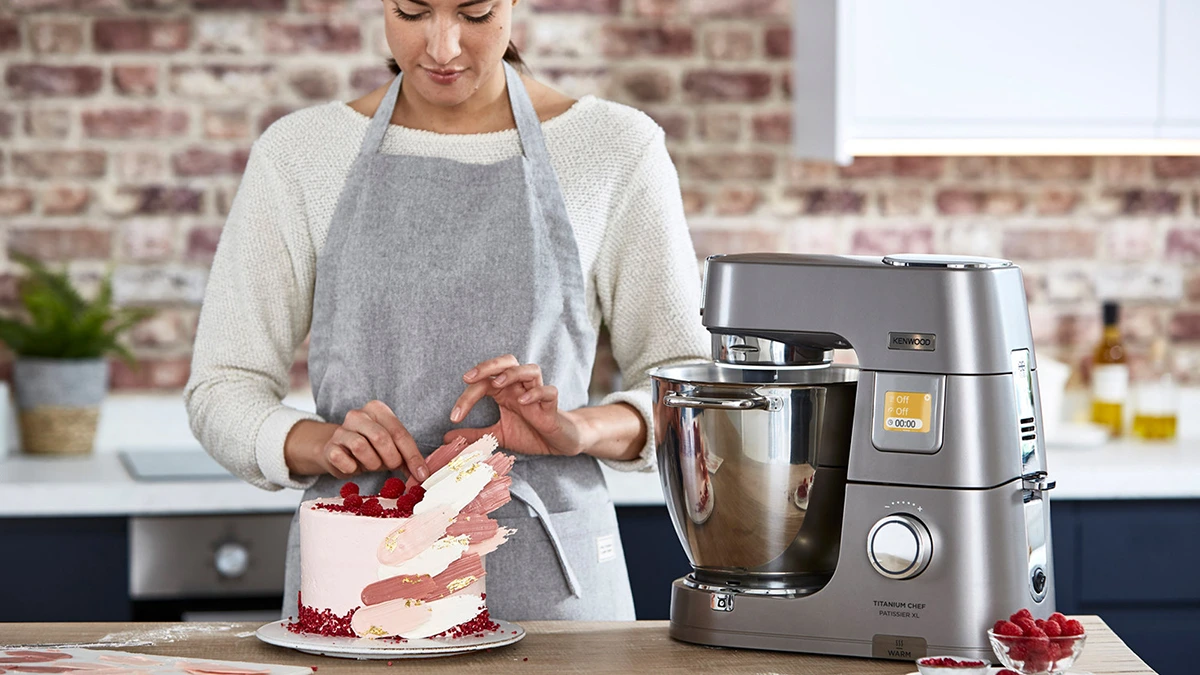
In short: A hand mixer is enough to begin with: it copes with meringue, frosting and loose batters. A planetary mixer becomes necessary once yeasted and laminated doughs appear — only it kneads a stiff mass without overheating.
Why a mixer matters
Choosing a mixer is a serious decision for any pastry cook. It is what lets you make everything from simple bakes to complex cakes and creams, and its real job is producing consistency and aeration reliably rather than by force of arm.
Hand mixer
Light, cheap and enough for most of what a beginner does: whipping whites, beating frosting, mixing loose batters. Its limit is stiff dough — used regularly on that, the motor overheats and fails within months.
Stand mixer
The whisk rotates on a fixed axis while the bowl turns. Better than a hand mixer for long jobs because you are not holding it, but the mixing action still misses parts of the bowl.
Planetary mixer
The attachment spins on its own axis while travelling around the bowl, so it covers the entire volume. This is what makes it the only one of the three that genuinely kneads: enriched dough, laminated dough and large batches of meringue.
What to look at when buying
| Power | Handles | Buy it when | |
|---|---|---|---|
| Hand | 350–500 W | meringue, frosting, loose batter | you are starting out |
| Stand | from 500 W | the same, hands free | you whip often and for long |
| Planetary | from 800 W | enriched and laminated dough | bread and croissants appear |
Frequently asked questions
Does a beginner need a planetary mixer
Not immediately. A hand mixer covers frosting and batters; the planetary pays for itself when meringue, marshmallow and yeasted dough become regular work.
Can a hand mixer knead yeasted dough
Briefly, with dough hooks. Used on stiff dough regularly it burns out within a few months.
What bowl capacity should I choose
4.5–5 litres covers home work. In a smaller bowl the whisk cannot reach two or three egg whites.