

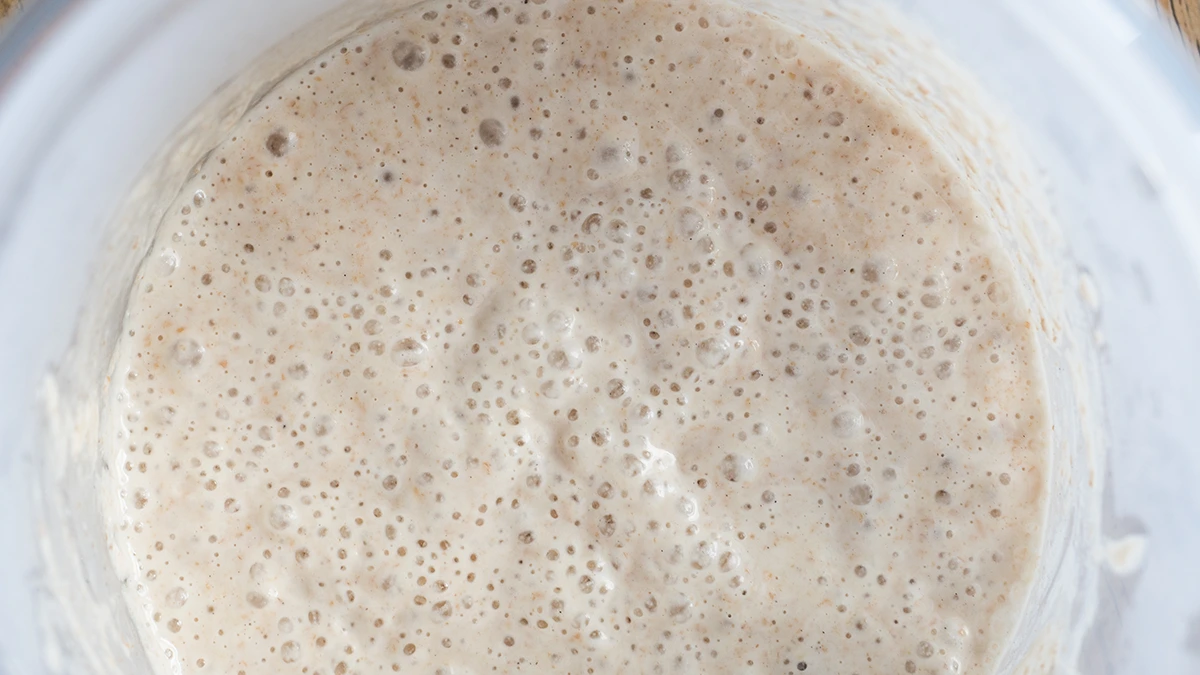
In short: The test takes ten minutes. Stir a teaspoon of yeast into 100 ml of water at 35–38 °C with a teaspoon of sugar. A foam cap should rise within ten minutes. No foam means the yeast is dead and no dough will rise on it.
Why test at all
Yeast is a living organism, and it dies from heat, age and poor storage. Testing it first costs ten minutes; skipping the test can cost you the flour, the butter, the eggs and half a day of proving that never happens.
The test, step by step
- Warm 100 ml of water to 35–38 °C.
- Add a teaspoon of sugar and stir until dissolved.
- Stir in a teaspoon of the yeast you want to test.
- Leave it for ten minutes somewhere warm and draught-free.
Live yeast produces a visible foam cap and a distinct bready smell. A flat surface with a few isolated bubbles means the yeast has lost most of its strength; a completely still surface means it is dead.
Temperature matters most
Above 45 °C the yeast is killed outright, and below 30 °C the reaction is so slow that the result tells you nothing. A thermometer removes the guesswork — this is exactly the kind of task a probe thermometer earns its place on.
What to check before blaming the yeast
If the yeast foams but the dough still refuses to rise, the problem lies elsewhere: too much salt or sugar, liquid that was too hot when mixed, a kitchen below 22 °C, or simply not enough time.
Frequently asked questions
What water temperature does the test need
35–38 °C. Above 45 °C the yeast dies; below 30 °C the reaction is too slow to read.
Does the same test work for fresh yeast
Yes, the method is identical. Fresh compressed yeast should also crumble easily and smell bready rather than sour.
The yeast foamed but the dough did not rise
Then the yeast is not the problem. Check the salt and sugar levels, the room temperature and how long you gave it.