

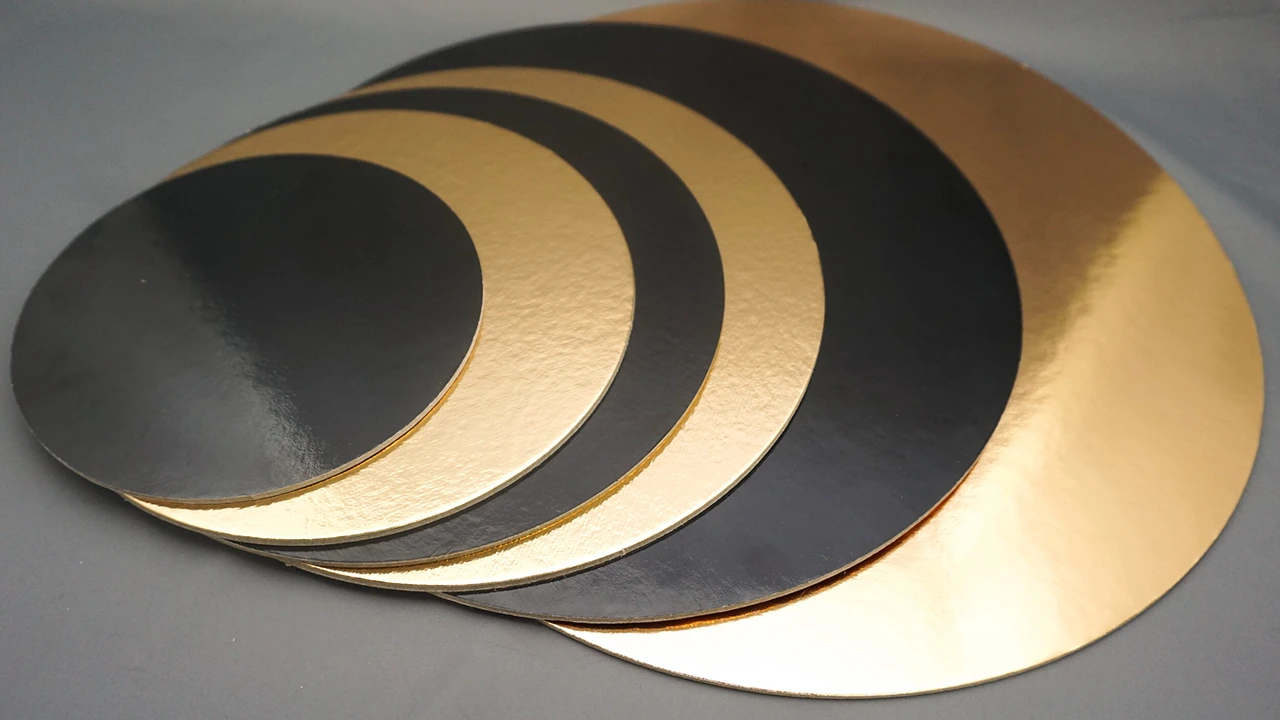
In short: A board holds the cake through assembly and transport and stops it deforming. Choose on three counts: a diameter a couple of centimetres larger than the cake, enough thickness for the weight, and a coating that will not soften under frosting.
What a board is for
The board is a key part of assembly. It prevents the cake from deforming and lets you move it from the work surface into a delivery box without incident. It also doubles as a decorative element, which is why finish matters as well as function.
Diameter
One to two centimetres larger than the cake. Cut too close and there is nowhere to hold it; too generous and the proportions look wrong.
Thickness
Match it to weight. A single-tier sponge sits happily on a thin board; a tiered or mousse cake needs a rigid one, or it flexes the moment you lift it and the coating cracks.
Coating
Laminated boards resist moisture. Plain uncoated cardboard absorbs it from the frosting and loses its rigidity within a day — which is exactly when the cake is being delivered.
Frequently asked questions
What diameter cake board should I use
One to two centimetres larger than the cake: enough to pick it up without touching the sides.
What thickness do I need
It depends on weight. Tiered and mousse cakes need a rigid board or it flexes when lifted.
Will the board go soggy from the frosting
A laminated one will not. Plain cardboard absorbs moisture and softens within a day.