

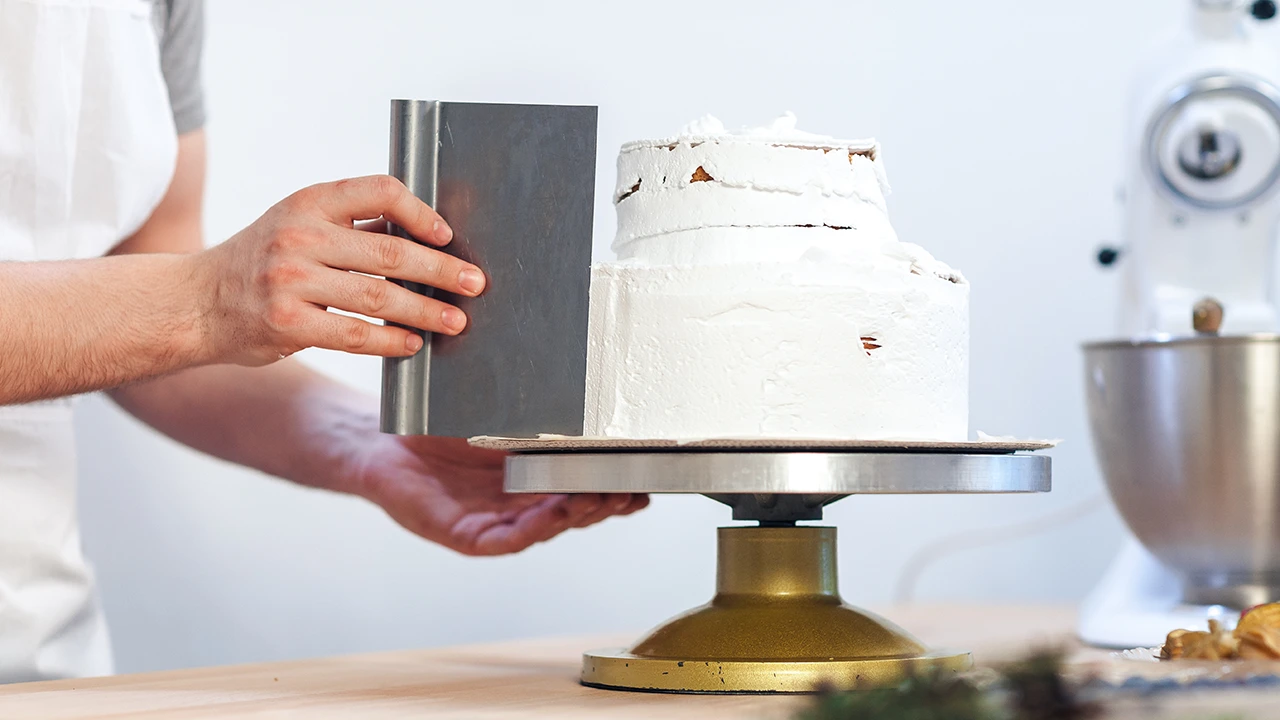
In short: A turntable is what makes an even coat possible — without one, smoothing a cake properly is close to impossible. They differ in shape, size, material and whether they tilt. What matters when choosing is stability and how freely the top spins.
Why it is not optional
A rotating stand is an indispensable tool for any pastry cook. Without it, levelling the coating on a cake is practically impossible: the scraper has to stay still while the cake moves, and that only works if the cake is the thing turning.
Shape and size
Stands come square, rectangular and round. Round is the standard for cake work; the square ones are display stands rather than working tools.
Choose a diameter a few centimetres larger than the biggest cake you make. On a smaller top there is nowhere to rest the scraper.
Material
Aluminium and cast iron are heavy, and that weight is the point: the stand does not wander across the worktop while you press a scraper against the cake. Plastic is lighter and cheaper but skids under pressure.
The bearing
Spin the top before buying. It should turn smoothly and keep turning after you let go. A stand that stutters transfers every catch straight into the coating.
Tilting models
A tilting stand makes the sides easier to reach and is genuinely comfortable for long jobs, but it is not a prerequisite. The skill develops just as well on a flat one.
Frequently asked questions
What diameter turntable should I buy
A few centimetres wider than your largest cake, so there is room to rest the scraper.
Is aluminium better than plastic
Yes, mainly for weight and the bearing. A heavy base stays put and a smooth bearing gives a cleaner coat.
Do I need a tilting turntable
No. It is comfortable for working the sides, but you can learn to coat perfectly well on a flat one.