

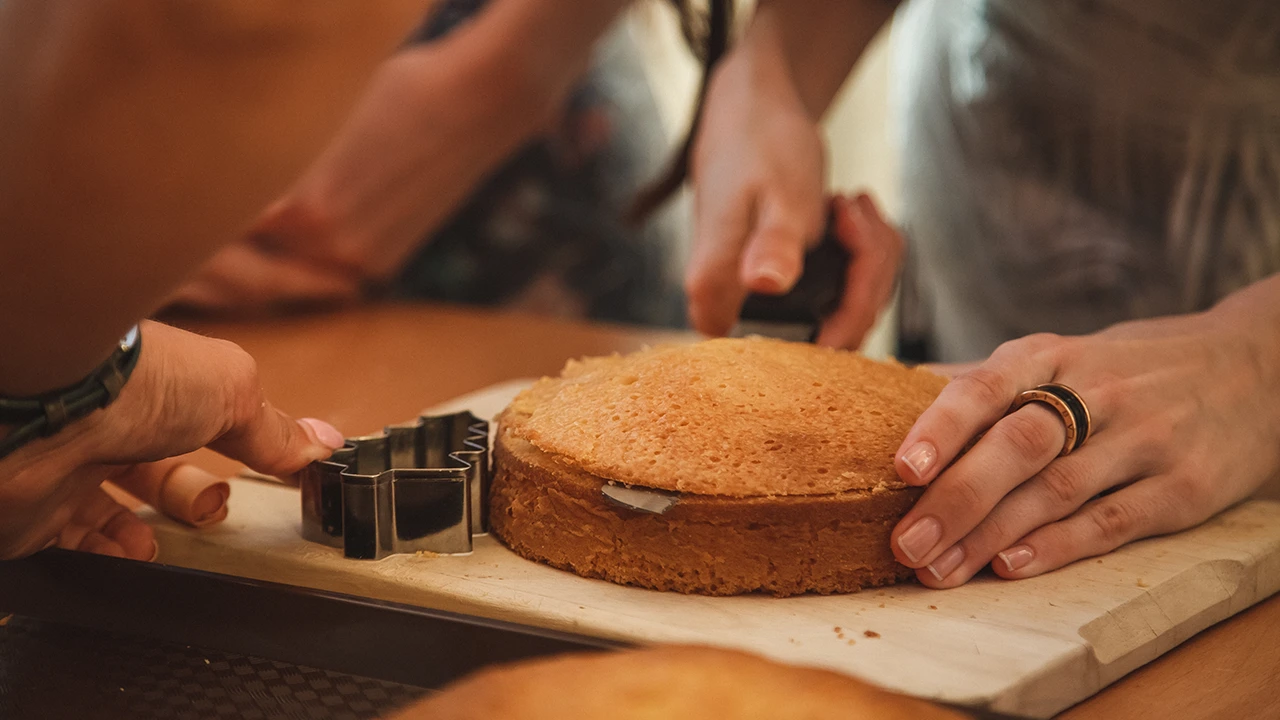
In short: Slice a sponge once it is cold and rested — several hours at minimum, ideally overnight wrapped in film. A warm sponge crumbles and sinks. A cake wire or a long serrated knife works best, and you turn the cake rather than pushing the blade across it.
Let it cool first
A sponge has one characteristic habit: it sinks. To avoid that, do not turn it straight out of the tin — let it cool there first. Only then does it have the structure to be handled.
Why resting matters
After baking, moisture in a sponge is unevenly distributed: wet in the centre, drier at the edges. A few hours wrapped in film lets it equalise, and the crumb becomes firm enough to cut cleanly instead of tearing.
Wire or knife
A cake wire gives the most even cut and needs no particular skill. A long serrated knife works just as well provided you rotate the cake against a stationary blade rather than sawing across it.
Getting even layers
Score a shallow guide line all the way round at the height you want, then cut along it while turning the cake. Cutting to a line you can see beats judging by eye every time.
Frequently asked questions
Why does my sponge crumble when I cut it
It is still warm or has not rested. Give it several hours wrapped in film so the moisture distributes evenly.
Wire or knife — which cuts better
A wire is more even and needs no skill. A serrated knife works equally well if you rotate the cake rather than sawing.
How do I get layers of the same thickness
Score a shallow guide line around the cake at the height you want and cut along it, turning the cake as you go.