

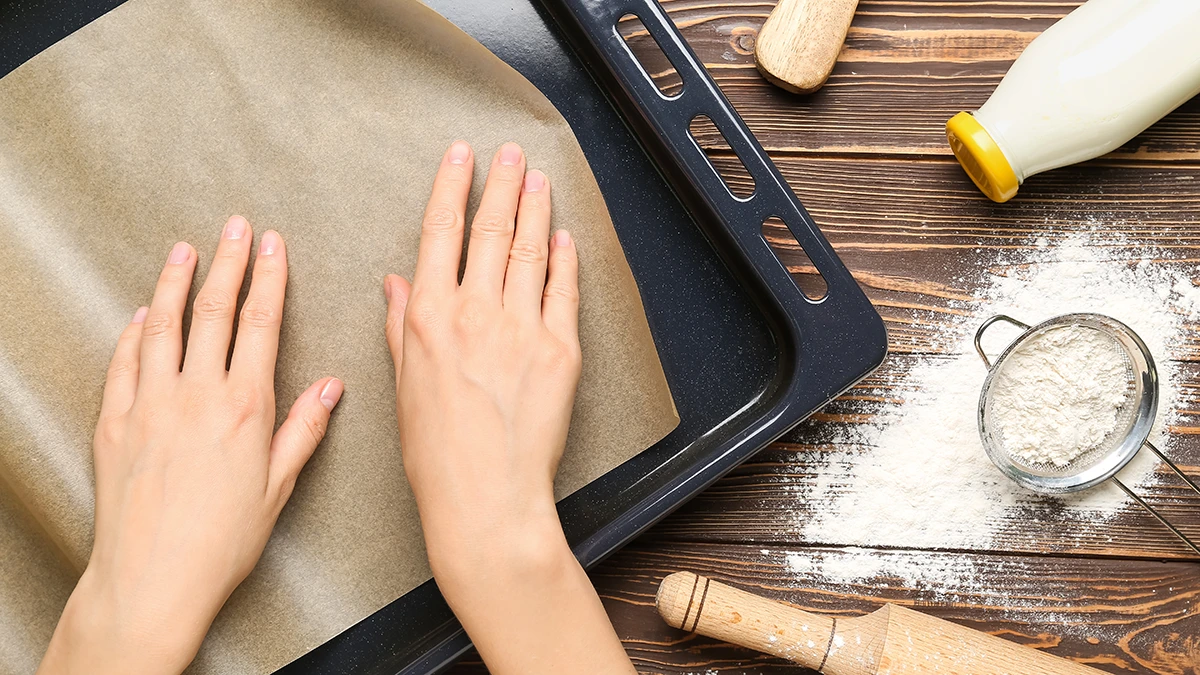
In short: The best parchment paper substitute is a silicone baking mat — it is reusable and handles high oven heat. In a pinch, a tin greased with butter and dusted with flour works. Never use newspaper, wax paper or cling film.
1. Silicone baking mat
A silicone mat suits desserts, baked goods and most other dishes. It goes into a hot oven without any risk of melting, it is reusable, and its non-stick surface is excellent. Three things to know before you rely on it:
- it absorbs fat easily and is then hard to clean;
- it does not let air circulate freely, so it is a poor choice for shortcrust pastry and choux;
- before first use it should be held in the oven at 200 °C for two hours.
2. Teflon sheet
Similar to silicone in most respects — reusable, strongly non-stick, keeps its shape when heated — but with a few advantages: it is easier to clean, heats and cools quickly and suits any dish.
Minor drawbacks: it works up to 260 °C, sugar and fruit syrups can stick to it, and it should be stored rolled rather than folded to avoid creases.
3. Siliconised parchment
Paper with a silicone coating is one of the best alternatives: it can be used several times, suits baking and roasting alike, and barely absorbs fat.
4. Tracing paper
A last-resort option. It is single use, slides around during baking, needs greasing, works only up to 200 °C, and the food can scorch against it.
5. Kraft paper
Its real purpose is wrapping bread, and it is sold in rolls or sheets so you can cut it to size. It is reasonably strong and tolerates temperatures above 200 °C, but it must be oiled before use.
6. Roasting bag
Not a good choice for several reasons: it withstands only 180 °C, it can melt against the oven wall, and it is not recommended for cakes and pies. Cookies are about the limit of what it can do.
7. A layer of flour
If you have none of the above, you can manage without any lining at all:
- Grease the tin with butter or oil.
- Dust a thin, even layer of flour over it.
- Tap out the excess from the sides.
What never to use
Unless you want a fire or a dose of decomposition products, never treat any of these as a substitute for parchment: pages from newspapers, books or notebooks; wax paper; silicone sheets not intended for food; cling film.
Frequently asked questions
Can you bake on aluminium foil
Only greased, and never for sponge or meringue — they stick fast. Foil also traps moisture, so the base comes out damp.
Why is a silicone mat better than parchment
It does not slide, spreads heat more evenly and keeps the base from drying out. A perforated mat is a separate item, needed for tartlets and éclairs.
Does plain tracing paper work
No. Untreated tracing paper starts to scorch at 180 °C.