

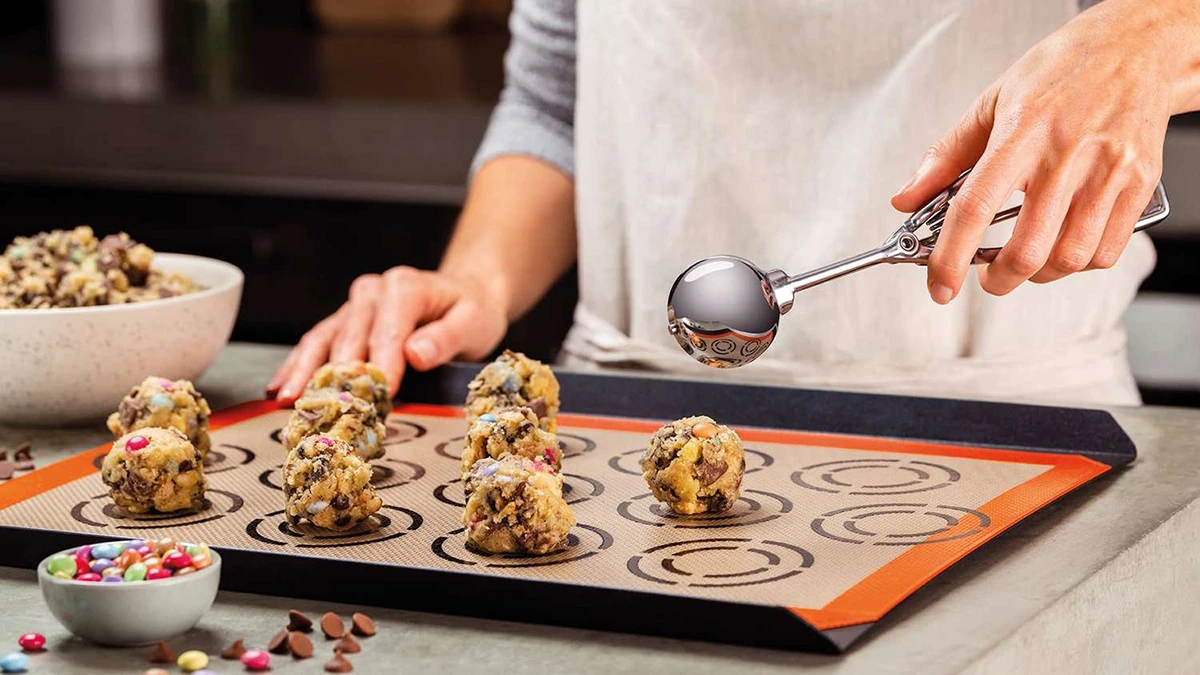
In short: A silicone mat replaces parchment: it does not slide, does not stick and lasts for years. A perforated mat is a separate item, needed for tartlets and éclairs where air has to reach the base.
Why a mat rather than paper
Every pastry cook needs to know why a baking mat matters. Some still use ordinary parchment or, worse, newspaper — inconvenient because things stick and questionable because the material was never meant for food.
A mat does not shift when you pipe onto it, spreads heat more evenly and does not let the base dry out.
Materials
Silicone. The standard: reusable, strongly non-stick, tolerates high oven heat. It does absorb fat over time and becomes harder to clean.
Teflon. Easier to clean, heats and cools faster, but works to a lower maximum temperature and should be stored rolled rather than folded.
Perforated mats
The holes let air and steam reach the underside, which is why tartlet cases and éclairs come out with a properly baked base rather than a damp one. For sponge and cookies a plain mat is fine.
Before first use
A new silicone mat should be held in the oven at 200 °C for around two hours. Skipping this leaves a faint smell that transfers to the first few bakes.
Cleaning
Warm water and no abrasives. A greasy film comes off with bicarbonate of soda. The dishwasher works but shortens the non-stick life.
Frequently asked questions
Why is a mat better than parchment
It does not slide, spreads heat more evenly and is reusable. Parchment is cheaper and easier for a one-off job.
What is a perforated mat for
The holes let air and steam through, so the bases of tartlets and éclairs bake properly instead of staying damp.
How do I clean a silicone mat
Warm water without abrasives; bicarbonate of soda for grease. Avoid the dishwasher if you want it to last.