

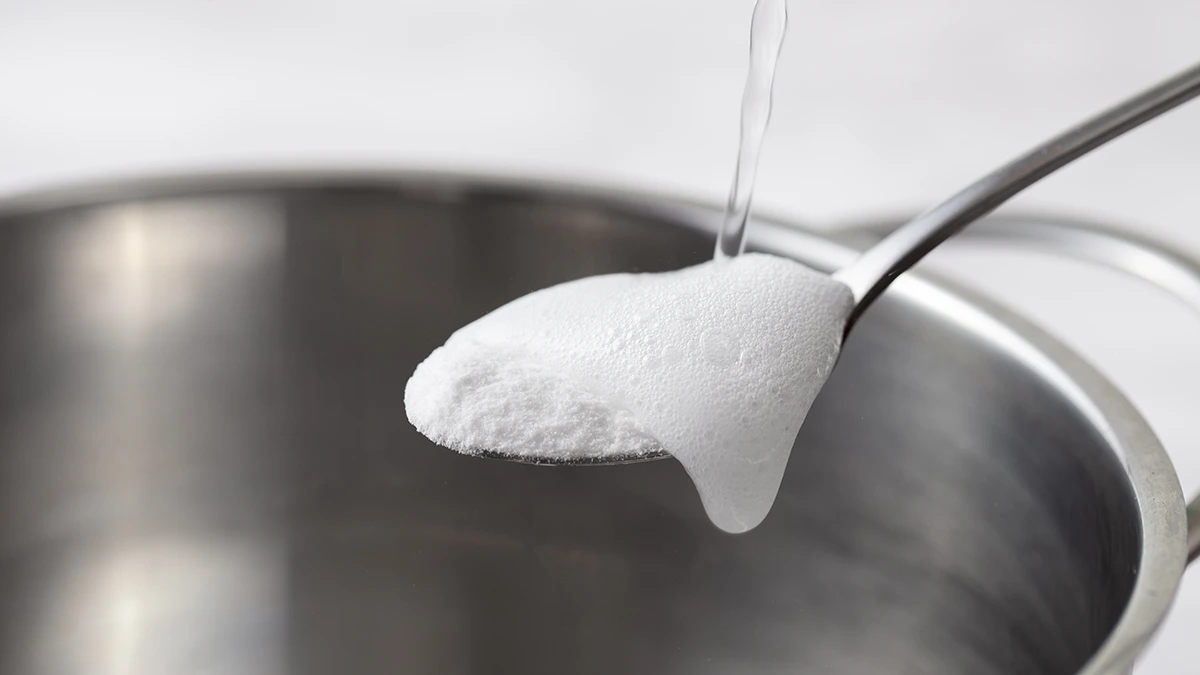
In short: The simplest baking powder substitute is baking soda plus an acid: for one teaspoon of baking powder use a quarter teaspoon of soda and half a teaspoon of lemon juice or vinegar. The second option is a homemade mix of soda, citric acid and starch.
Homemade baking powder
Easy to make from what is almost certainly already in the cupboard. You will need 12 g of flour, 5 g of baking soda and 3 g of citric acid. Mix thoroughly and store in a dry, closed container.
Note that homemade baking powder goes straight into the flour in the same proportion as the shop-bought kind.
Baking soda plus an acid
Soda needs an acidic component to activate. In its presence it releases carbon dioxide bubbles that lift the dough.
Lemon juice. Use it if you do not mind a faint citrus note. To replace one teaspoon of baking powder, add a quarter teaspoon of soda to the dry ingredients and half a teaspoon of lemon juice to the wet ones.
Vinegar. Works the same way. Plain white vinegar is best so the bake does not pick up a distinctive smell. Here one teaspoon of baking powder equals half a teaspoon of vinegar plus a quarter teaspoon of soda.
Cream of tartar. This is what industrial baking powder is built on, so mixing it with soda gets you very close to the real thing. Combine two parts cream of tartar with one part soda and add the mix to the dry ingredients.
Cultured dairy — sour cream, buttermilk, yoghurt. Half a cup of yoghurt in the wet ingredients plus a quarter teaspoon of soda in the dry ones gives the same effect as a teaspoon of ordinary baking powder. Remember to reduce the other liquids by half a cup, since the yoghurt has replaced them.
Self-raising flour
This flour already contains plain flour, salt and a raising agent, so adjust the recipe and leave those out. It is not worth experimenting with in complicated recipes, but simple things such as pancakes turn out well.
Substitution table
| Substitute | Per 1 tsp baking powder | What to watch |
|---|---|---|
| Homemade baking powder | same amount as shop-bought | 12 g flour + 5 g soda + 3 g citric acid, stored dry and sealed |
| Soda + lemon juice | ¼ tsp soda and ½ tsp juice | leaves a faint citrus note |
| Soda + vinegar | ¼ tsp soda and ½ tsp vinegar | combine in the batter, not in a spoon, or the gas is wasted |
| Soda + cultured dairy | ¼ tsp soda | buttermilk or sour cream already supplies the acid — add none separately |
Frequently asked questions
How much soda replaces a teaspoon of baking powder
A quarter teaspoon of soda plus an acid. More soda gives a soapy taste and a yellowish crumb.
Do you still need acid if the batter contains buttermilk
No. Cultured dairy neutralises the soda on its own, and extra vinegar will only spoil the flavour.
Why does my bake taste of soda
Either too much soda went in, or there was not enough acid to neutralise it. The acid is not optional.