

In short: Alcohol in baking opens up flavour, carries aroma and does the work in a soak. It can be replaced with juice, strong tea, coffee or a flavoured syrup — the taste changes, but the soak still does its job.
What alcohol does
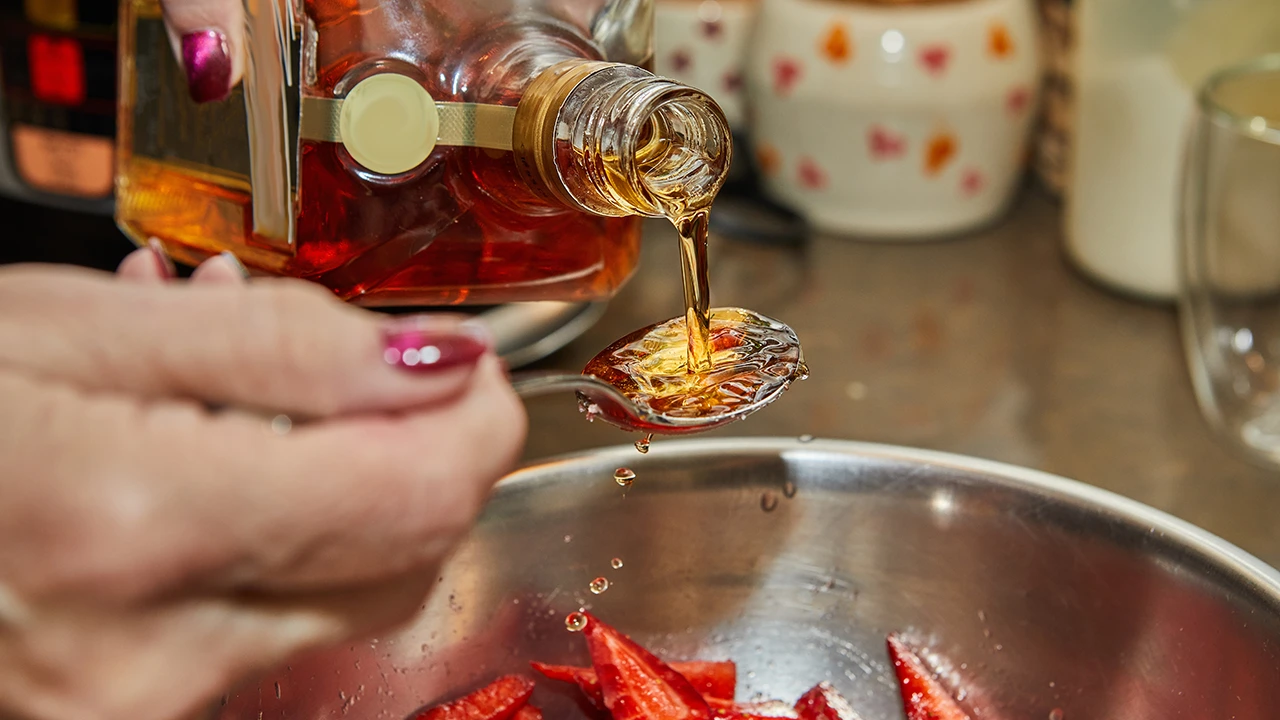
A number of desserts genuinely need alcohol. It is added to open up the flavour of a bake in a new way and to give it a particular aroma. Not everyone likes it, but in some cases there is no way around it.
In practice it serves several distinct functions:
- As a flavouring. Rum, cognac and liqueurs each carry their own aromatic profile into the dessert.
- As a carrier. Many aroma compounds dissolve in alcohol and not in water, so it makes flavours audible that would otherwise stay hidden.
- In a soak. It moistens the layers and adds character at the same time.
- As a preservative. In ganache it slightly extends shelf life.
Does it cook off
Only partly. A measurable amount survives baking, which is why alcohol is best left out of anything intended for children.
What to use instead
For a soak, strong tea or coffee with a spoonful of syrup, fruit juice, or an alcohol-free vanilla extract — measure for measure. The aroma will differ, but the layers will be moistened just the same.
Frequently asked questions
Does alcohol burn off in the oven
Only partly. Some remains in the finished bake, so avoid it in desserts for children.
What can replace rum in a soak
Strong tea or coffee with a spoonful of syrup, fruit juice, or alcohol-free vanilla extract, measure for measure.
Why is alcohol added to ganache
It opens up the aroma of the chocolate and acts as a mild preservative, extending shelf life a little.