

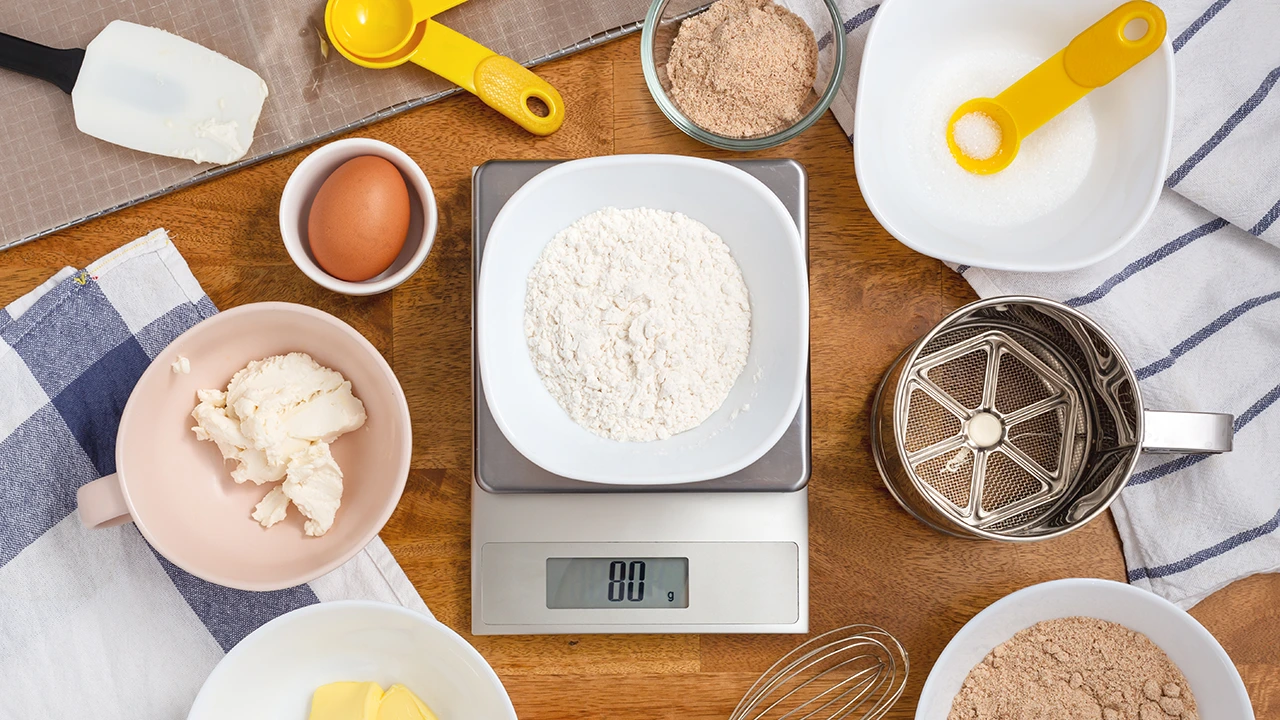
In short: In pastry work everything is measured by weight, not volume: a cup of flour can vary by 30–40 g depending on how it was filled. Scales accurate to one gram are the first thing worth buying.
Why cups fail
Not every home cook owns scales, and for a great deal of cooking they are genuinely unnecessary. Making soup does not require knowing the exact weight of a carrot.
Pastry is different. The same cup of flour weighs differently depending on whether it was scooped or spooned and how much it was tapped down — and in a sponge that difference alone changes the result.
Which scales to buy
Accurate to one gram, with a tare function so you can weigh straight into the bowl. For gelatin, baking powder and colouring, a jeweller’s scale reading to 0.1 g is a useful second purchase.
Weighing liquids too
Water is the one case where volume and weight coincide. Honey, syrup, oil and cream do not: a millilitre of honey weighs considerably more than a millilitre of water, and recipes written in grams expect grams.
Baker’s percentages
Bread recipes are written as percentages of flour weight, which only works if everything is weighed. It is also what lets you scale a recipe up or down without recalculating anything by hand.
Frequently asked questions
Why can I not measure in cups
The same cup of flour weighs differently depending on how it was filled. In a sponge that difference changes the result.
Which scales does a pastry cook need
Accurate to one gram with a tare function. A 0.1 g scale is useful for gelatin and baking powder.
Should liquids be weighed as well
Yes. For water it makes no difference, but honey, syrup and oil differ substantially between volume and weight.