

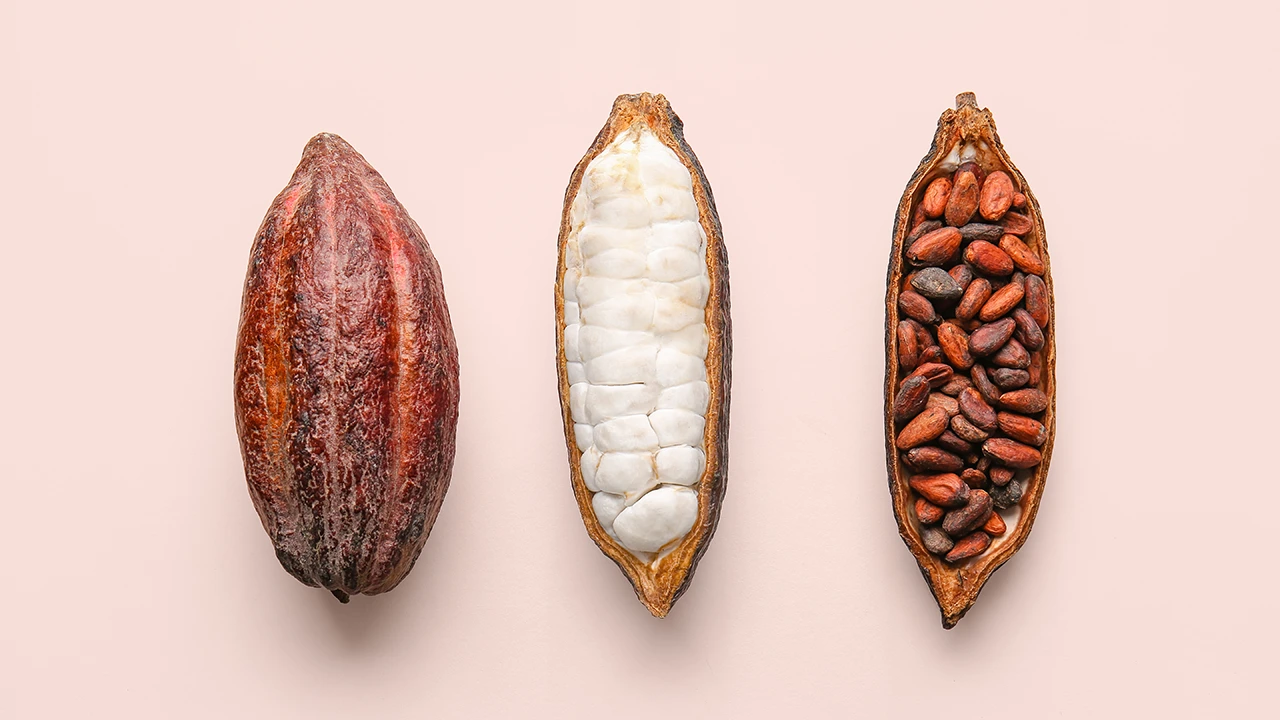
In short: The cocoa bean yields cocoa mass, cocoa butter and cocoa powder. Dark chocolate is cocoa mass, cocoa butter and sugar; milk chocolate adds milk solids; white chocolate is cocoa butter, milk and sugar and contains no cocoa mass at all.
Cocoa powder
Powder comes in two kinds. Natural is what remains after the cocoa butter is pressed out of the cocoa mass: light brown, slightly acidic. Dutch-processed has been treated with alkali, which darkens the colour and mellows the flavour.
The difference matters for baking: only natural cocoa carries enough acid to activate baking soda.
Cocoa mass and cocoa butter
Cocoa mass is ground roasted bean — around half fat, half solids, and the source of chocolate flavour. Cocoa butter is the fat pressed out of it: pale, almost odourless and by far the most expensive component of any chocolate.
What the percentage means
The figure on a bar is the combined share of cocoa products — mass plus butter. The rest is sugar, and in milk chocolate also milk solids. A 70 % bar tells you how much of it is not sugar; it says nothing about how much of that is butter and how much is mass.
The three types
| Type | Contains | Notes |
|---|---|---|
| Dark | cocoa mass, cocoa butter, sugar | bitter chocolate can be almost entirely cocoa products |
| Milk | the same plus milk solids | scorches sooner because of the milk |
| White | cocoa butter, milk, sugar | no cocoa mass, which is why it is not brown |
Frequently asked questions
What does the percentage on a chocolate bar mean
The total share of cocoa products — cocoa mass plus cocoa butter. The remainder is sugar, and in milk chocolate milk solids too.
Why is white chocolate called chocolate
Because of the cocoa butter, which is also a cocoa bean product. It contains no cocoa mass, which is why it is not brown.
How does cocoa powder differ from cocoa mass
Powder is what is left after the butter is pressed out and the cake is milled: around 10–22 % fat against 52–56 % in cocoa mass.
Sources
- Callebaut. Guide to Different Tempering Methods — how the types behave under heat and why milk and white work cooler