

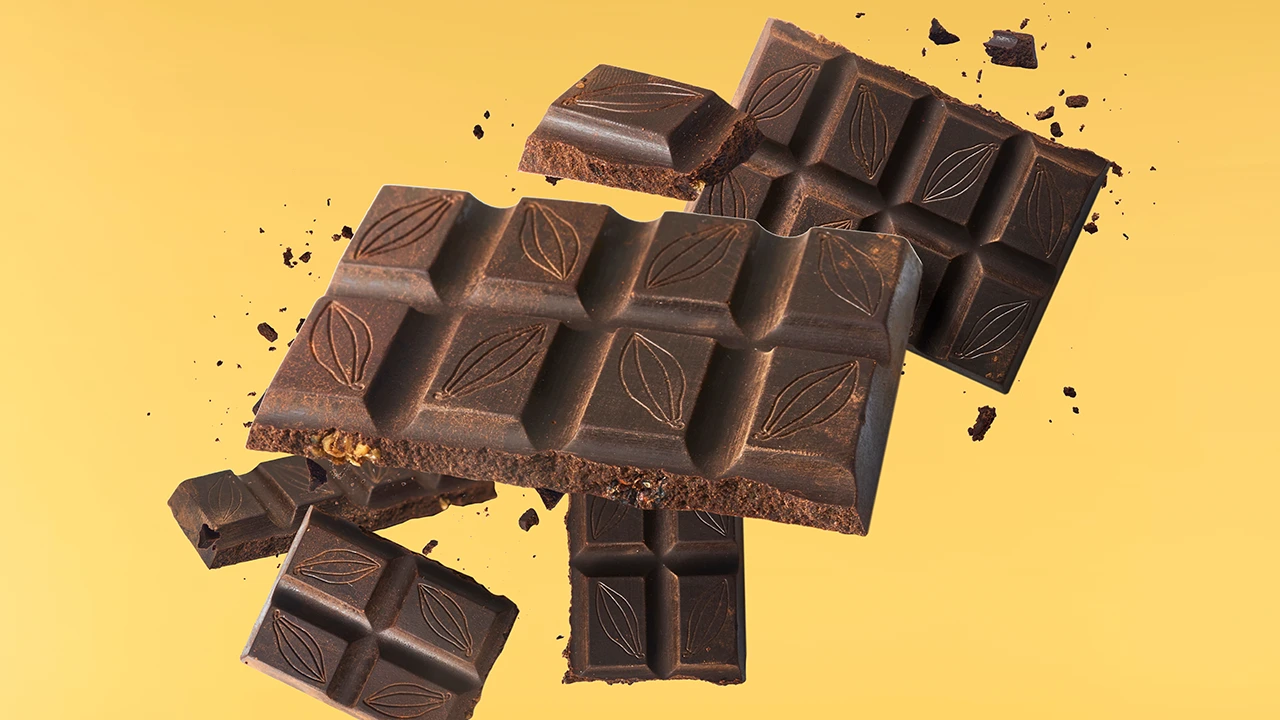
In short: In real chocolate the only fat is cocoa butter; in compound chocolate it is replaced with palm or another vegetable fat. That is why compound needs no tempering and sets on its own — but it gives no snap and melts less cleanly in the mouth.
What each contains
Compound chocolate and real chocolate look similar and behave very differently. Classic chocolate is almost always cocoa butter, sugar and cocoa, with the ratio shifting by type: white chocolate contains no cocoa mass at all, while in dark chocolate its share is high.
In compound, the cocoa butter is swapped for a cheaper vegetable fat. Everything else follows from that one substitution.
Tempering
Cocoa butter crystallises in several forms, only one of which gives shine and snap — hence tempering. Substitute fats do not behave that way, so compound sets hard on its own. Convenient, and the main reason it exists.
What you give up
Cocoa butter melts just below body temperature, which is what makes real chocolate dissolve cleanly on the tongue. Substitute fats melt higher and leave a waxy coating. You also lose the sharp crack of a properly tempered shell.
Where compound makes sense
Where speed and cost outweigh mouthfeel: large batches of covered confectionery, decorations made in a warm kitchen, work where tempering is impractical. For bonbons and anything meant to be tasted rather than looked at, use real chocolate.
Frequently asked questions
Does compound chocolate need tempering
No. Cocoa butter substitutes do not form unstable crystals, so compound sets without it.
Can I make bonbons from compound
You can, if speed and price are the priority. The snap, the shine and the melt will all be noticeably worse.
How do I spot compound in the shop
By the ingredients: if cocoa butter substitute or vegetable fat appears after the sugar, it is compound.