

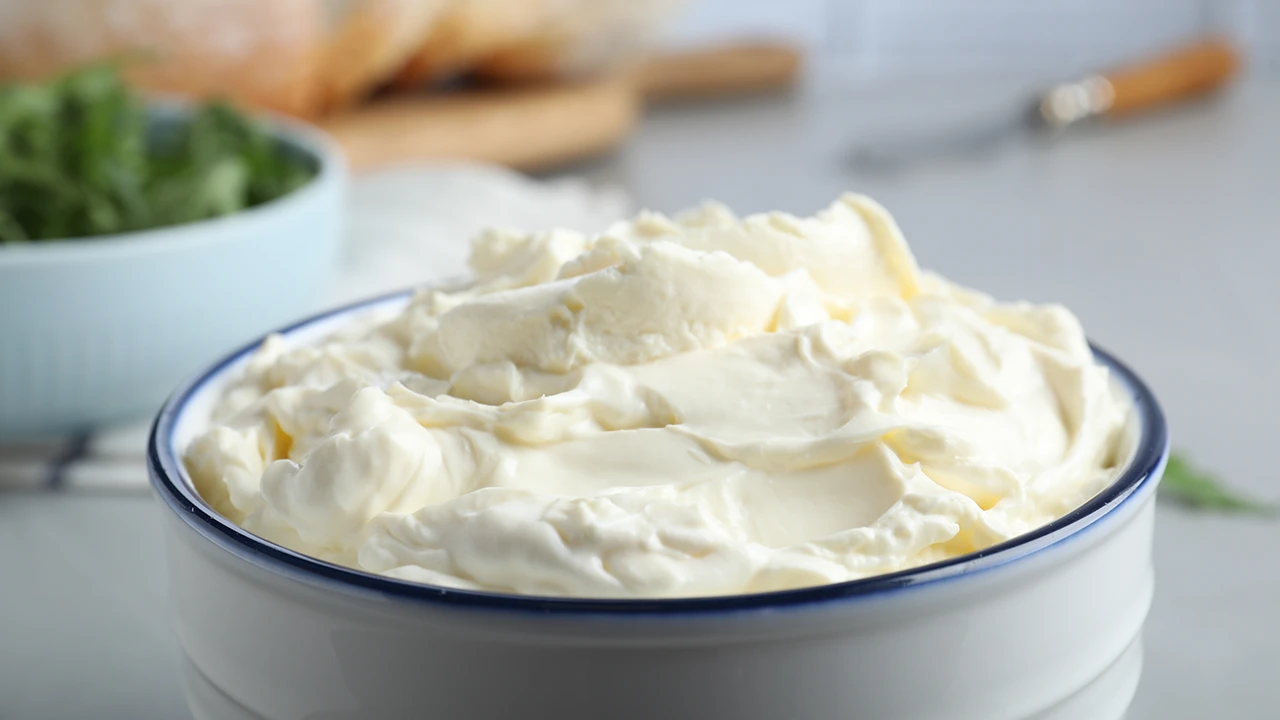
In short: Cream cheese frosting made on cream uses cold cream cheese, 33 % heavy cream and icing sugar — softer but less stable. Made on butter it holds its shape under fondant and in warm rooms but is denser. Every ingredient must be at the same temperature.
Why this frosting is everywhere
Cream cheese frosting is the most widely used frosting in cake work. It covers everything from piping cupcakes to smoothing the sides of a cake, and it forgives more imprecision than almost any other cream.
1. On butter
All ingredients at room temperature. For coating a 16–18 cm cake: whip 200 g of butter with 50–90 g of icing sugar on medium speed until light. Add 400 g of cream cheese and whip on medium or low speed. If the frosting comes out too soft, chill it briefly.
2. With fruit purée
Prepare the ingredients in advance and bring them to the same temperature. The purée must be thick — a runny one will loosen the frosting past the point of rescue.
3. On cream
Cold cream cheese, 33 % heavy cream and icing sugar. Lighter and fresher in flavour than the butter version, but noticeably less stable: it will not survive a warm room or a layer of fondant.
4. With chocolate
Melted and cooled chocolate is folded into the butter-based version. The frosting sets firmer, so work quickly once the chocolate is in.
5. Reduced sugar
The icing sugar can be cut back considerably — the cheese carries the structure, not the sugar. Taste as you go: below a certain point the salt in the cheese starts to dominate.
Frequently asked questions
Why has my cream cheese frosting split
The ingredients were at different temperatures, or the cheese was too warm. Take the cheese straight from the fridge, use room-temperature butter and do not over-whip.
Which version holds up under fondant
Only the butter-based one. The cream version will slump under fondant even in a cool room.
How long does it keep
Up to three days refrigerated in a sealed container; a cake filled with it, up to 72 hours at 2–6 °C.