

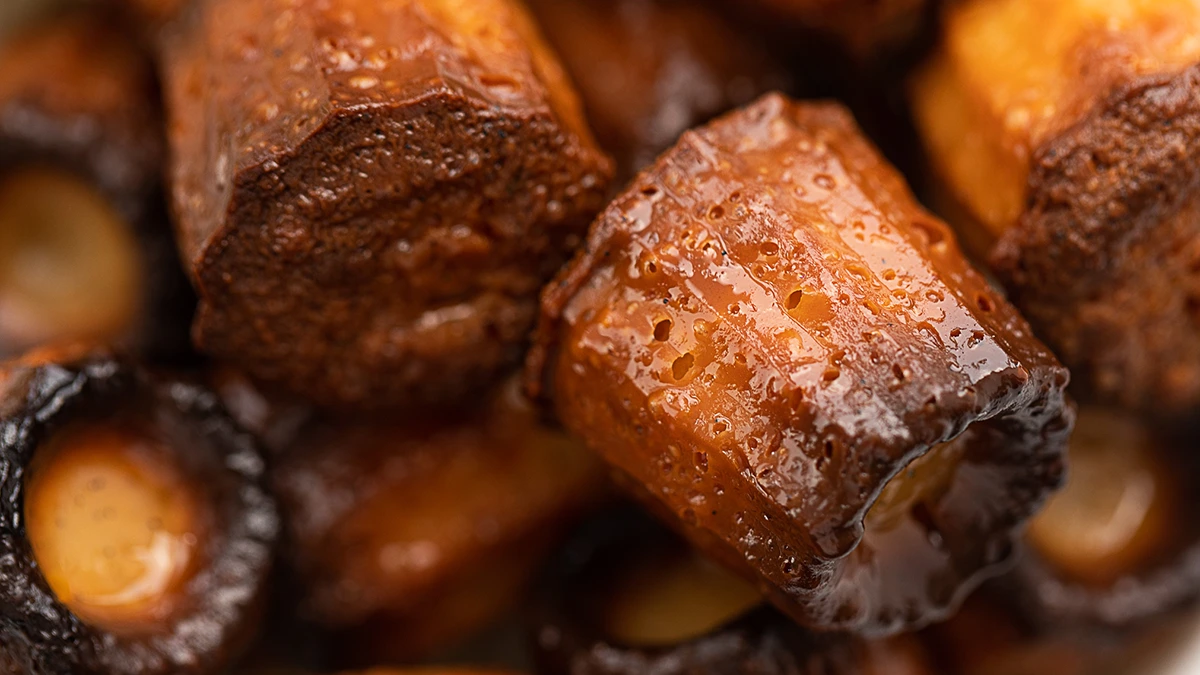
In short: The canelé is a traditional dessert from the French city of Bordeaux: a crisp caramelised shell around a soft custard centre. The shell comes from copper moulds and beeswax; the texture comes from resting the batter cold for at least a day.
Where canelés come from
The canelé de Bordeaux is a traditional French dessert whose origin is tied to the city of Bordeaux in the south-west. They are small cakes in the shape of a fluted cylinder.
Their defining feature is the contrast: a crisp outer crust against a tender, almost custard-like middle. Everything about the method exists to produce that contrast.
Why copper moulds
Copper conducts heat fast and gives it up fast, which is exactly what caramelises the outside before the inside sets. Silicone moulds will produce something canelé-shaped, but softer and paler — the crust never forms properly.
Beeswax
The moulds are coated with a mixture of beeswax and butter. The wax produces the glossy, crackling shell and releases the cake cleanly. It is not an optional flourish; without it the result is a different cake.
Resting the batter
The batter rests refrigerated for at least 24 hours. Without that rest the starch does not hydrate fully and the centre never becomes the smooth custard it should be. Many bakers rest it 48 hours.
Frequently asked questions
Do I really need copper moulds
For the classic crust, yes: copper releases heat quickly. Silicone gives a softer, paler result.
What is the beeswax for
It creates the glossy crackling shell and stops the cake sticking to the mould.
How long should canelé batter rest
At least 24 hours refrigerated. Without the rest the centre will not set to a proper custard.