

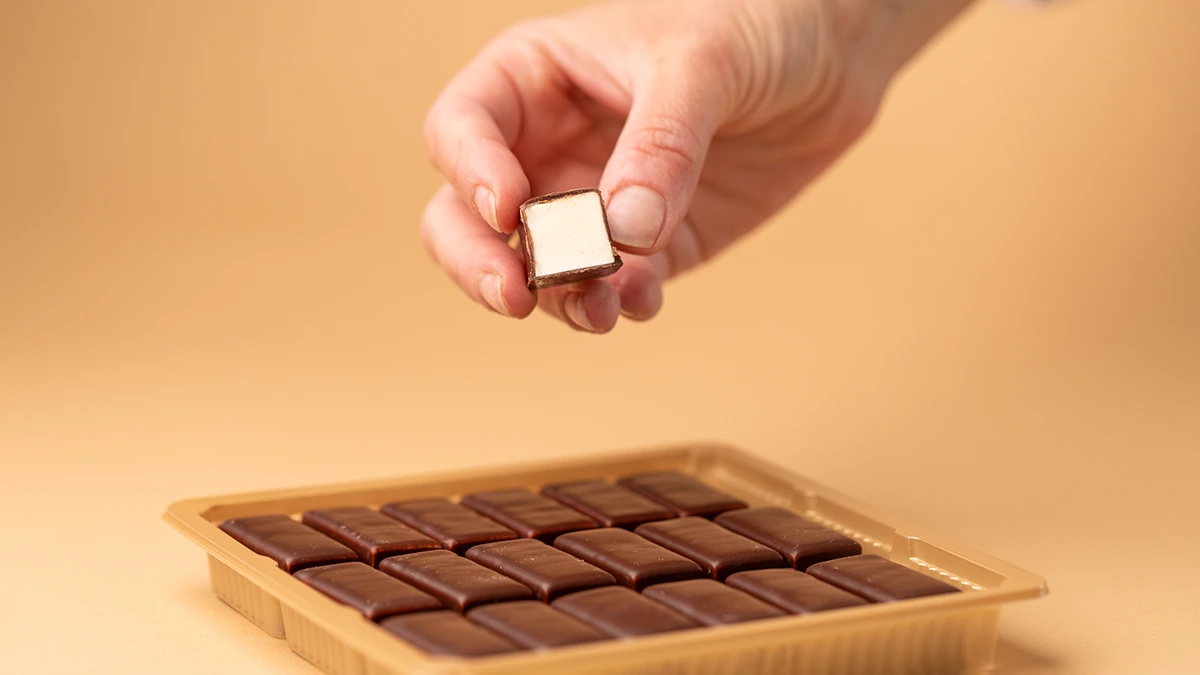
In short: Bird’s Milk, Napoleon, éclairs, shortcrust rings and Potato cakes — Soviet pastry chefs created recognisable desserts under conditions of shortage. It was precisely that limitation on ingredients that gave them their character: simple compositions and exact proportions.
Working under constraint
The Soviet era left behind a great many vivid food memories. Despite shortages and a limited range of ingredients, pastry chefs found ways to create genuinely remarkable desserts that became part of the national culture.
What looks like simplicity was often necessity: a short ingredient list executed precisely, because there was no room for error and nothing to disguise it with.
Bird’s Milk
The best known of them, and the only Soviet cake granted an author’s certificate. A soufflé set on agar between thin sponge layers, glazed in chocolate — technically demanding and unlike anything else on the shelves at the time.
Napoleon
Layers of puff pastry with custard, assembled and left to soften overnight. The version that became standard is a Soviet reworking rather than the French original.
Potato cake
Made from sponge trimmings, butter, condensed milk and cocoa — a way of using leftovers that turned into a classic in its own right.
Why they were so sweet
Sugar was more available than many other ingredients and doubled as a preservative in an era of short shelf life and unreliable refrigeration.
Frequently asked questions
Which Soviet dessert is the most famous
Bird’s Milk — the only cake in the USSR to be granted an author’s certificate.
Why are Soviet desserts so sweet
Sugar was more available than many other ingredients and acted as a preservative given short shelf lives.
Can they be made at home today
Yes — the ingredient lists are simple. The difficulty is usually technique rather than sourcing.