

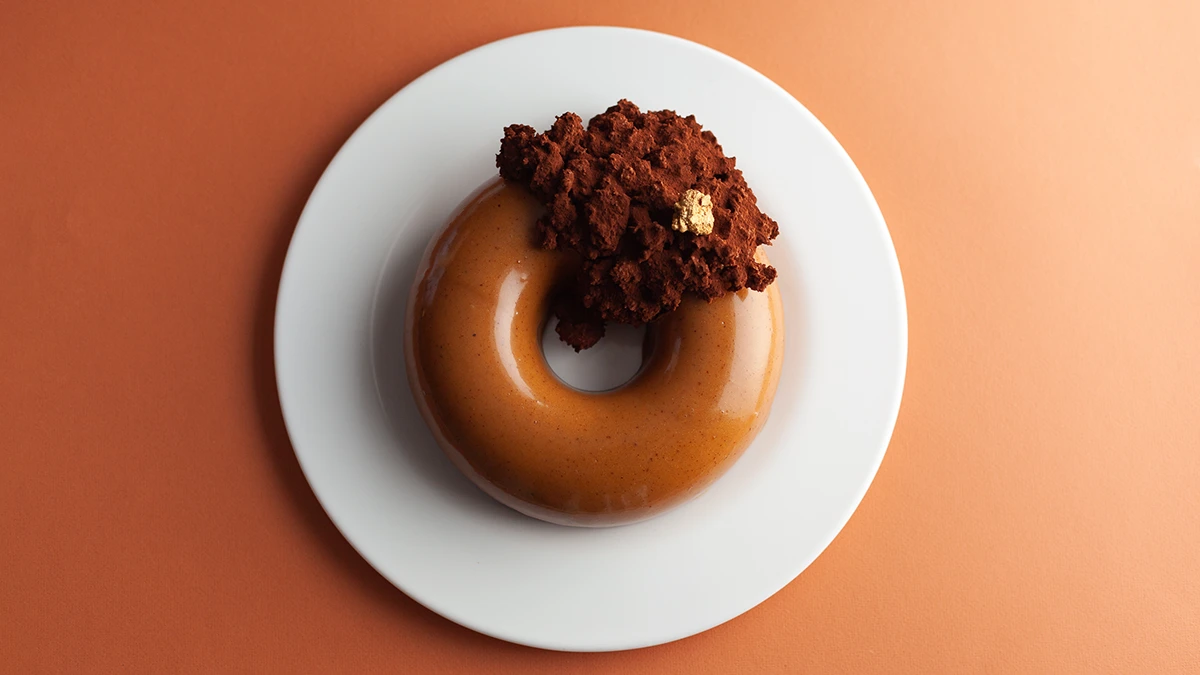
In short: A mousse cake is built in layers inside a mould and frozen: mousse, an insert of confit or crémeux, a crunchy layer and a base. The finish — glaze or velvet spray — goes onto the frozen piece.
Why they are built upside down
Mousse cakes are among the most refined desserts there are, and their soft aerated textures are exactly what makes them impossible to assemble the right way up. Everything goes into the mould in reverse, so the surface that touches the mould becomes the finished top.
The layers
Mousse. The bulk of the dessert, stabilised with gelatin, poured first.
Insert. A frozen disc of confit or crémeux pressed into the mousse — this is what gives a cut section its contrast.
Crunchy layer. Feuilletine or praline, providing the only textural resistance in an otherwise soft dessert.
Base. Sponge or dacquoise, added last and sitting flush with the top of the mould.
Freezing
Freeze for at least six to eight hours, preferably overnight. An incompletely frozen cake will not release from the mould and slumps under the coating.
The finish
Both mirror glaze and velvet spray are applied to a piece straight from the freezer. The temperature difference is what makes them set on contact — on a merely cold cake, glaze runs and velvet turns glossy instead of textured.
Frequently asked questions
In what order do the layers go in
Mousse first, then the insert, then the crunchy layer and the base. The cake is turned out upside down after freezing.
How long should a mousse cake freeze
Six to eight hours at least, ideally overnight. Anything less and it will not release cleanly.
What are mousse cakes coated with
Mirror glaze or velvet spray, both applied to the frozen piece.