

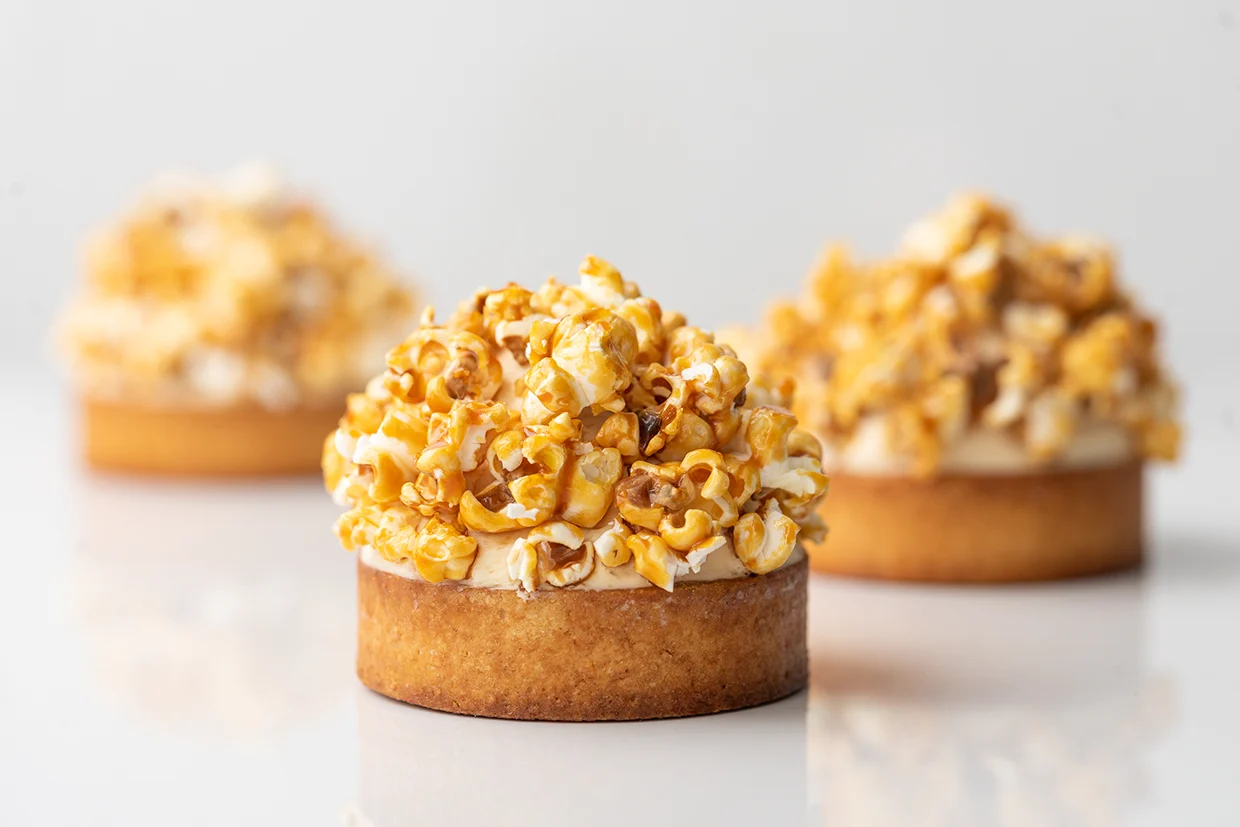
In short: A tartlet is a small shortcrust case with an open filling. Today it is both a dessert and a format for banquet canapés. The word came from French; the form itself goes back to the medieval habit of baking filling inside pastry as if in a dish.
What comes to mind
Crumbly shortcrust, a neatly arranged filling and a fluted case. Today the tartlet is not only an elegant dessert but a category of savoury canapé for receptions and buffets.
Where the form came from
The word arrived from French, but the idea is older. In medieval kitchens pastry was used as a vessel: the filling was baked inside a case that held the heat and the juices, and whether that case was eaten afterwards was a secondary question.
What changed over time is that the pastry stopped being packaging and became the point — thin, crisp and worth eating in its own right.
Which doughs are used
Sablé is sweet, rich and crumbly, and it is the usual choice for dessert tartlets. Brisée is more neutral and sturdier, which is why savoury fillings sit on it. Both are worked cold and rested before baking.
Why the base goes soggy
Because the filling went into an under-baked case. Blind-bake the shell, and seal the inside with melted chocolate or brushed egg white before adding anything wet.
Frequently asked questions
What is the difference between a tart and a tartlet
Size only. A tart is large, a tartlet is individual; the dough and the method are the same.
Which dough is used for tartlets
Shortcrust — sablé or brisée. The first is crumbly and sweet, the second more neutral and suited to savoury fillings.
Why is my tartlet base soggy
The filling went into an unbaked shell. Blind-bake the case and seal it with chocolate or egg white.