

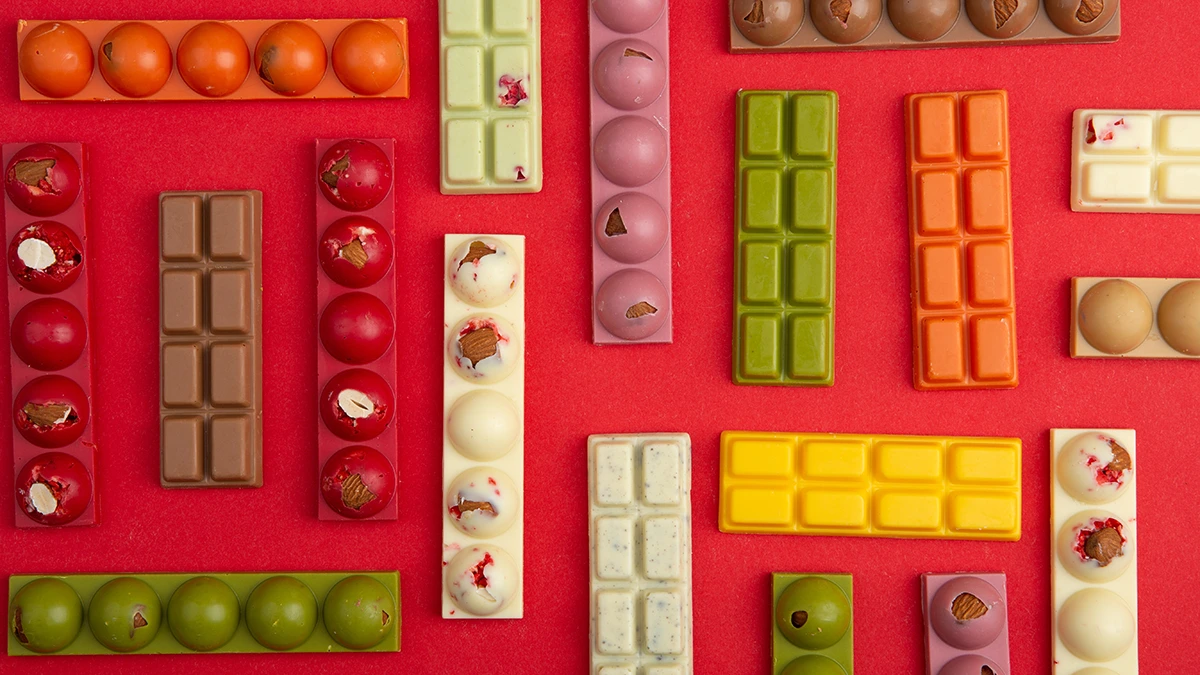
In short: Chocolate is coloured only with fat-soluble colours or lustre dust. A water-based colour makes the cocoa butter seize and the mass thickens into lumps. Add the colour to already melted chocolate at the same temperature.
Why water is the enemy
Modern colouring has reached the point where you can produce not only evenly coloured chocolate but genuine works of art in it. The one hard rule is that chocolate and water do not mix: even a small amount of water-based colour causes the cocoa butter to separate and the mass to seize.
Two groups of colouring
All food colours divide into two broad groups. Synthetic colours give strong, predictable, stable shades. Natural ones are gentler in composition but weaker in colour and less stable under heat.
For chocolate, what matters is not that division but solubility: it must be fat-soluble.
Lustre dust
Lustre dust is a dry pearlescent pigment. It is brushed onto set chocolate or let down with alcohol for painting. Because it carries no water at all, it is the safest option there is.
How to add colour
Melt the chocolate first, then bring the colour to the same temperature before adding it. Cold colour dropped into warm chocolate causes local setting and lumps. Stir it in gradually rather than all at once.
Frequently asked questions
Why did my chocolate seize after adding colour
Water got in, from a water-based colour or from condensation. The mass can go into a ganache but is finished for decoration.
What colours white chocolate best
Fat-soluble colours. White chocolate is essentially cocoa butter with milk and sugar, so colour reads on it more brightly than on any other type.
What is lustre dust
A dry pearlescent pigment. Brush it onto set chocolate or let it down with alcohol to paint with.