

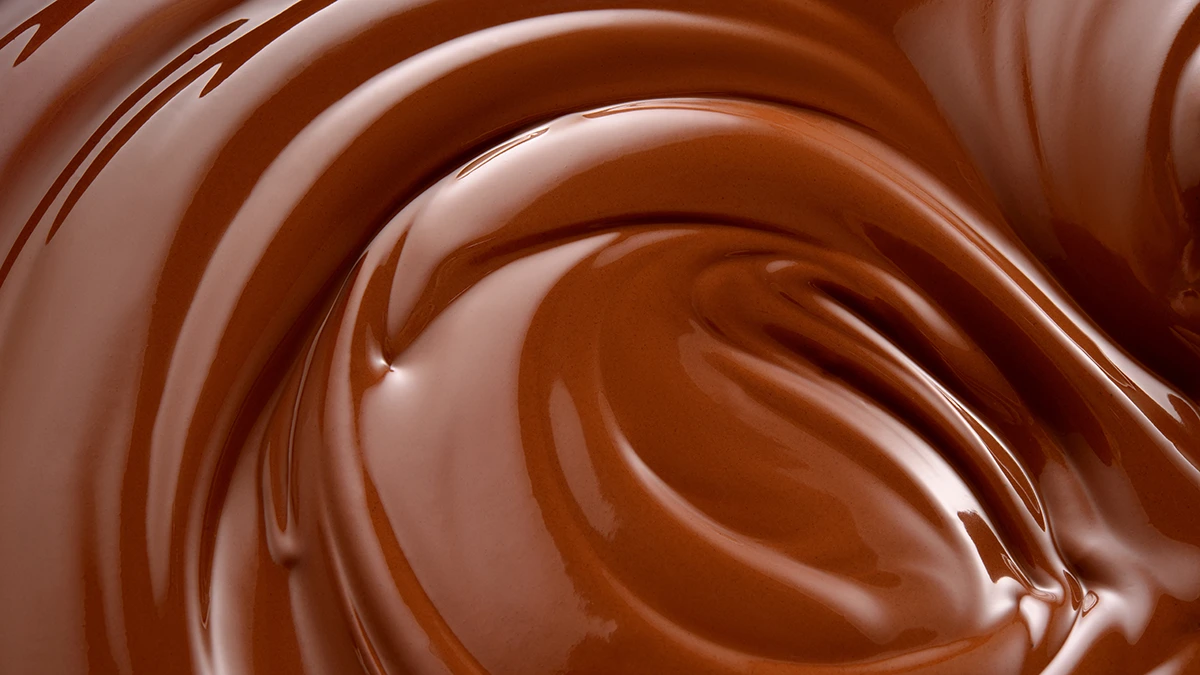
In short: Classic chocolate is cocoa butter, cocoa mass and sugar. In a coating the cocoa butter is partly or entirely replaced by another fat, and that single substitution explains the difference in price, flavour and behaviour under heat.
What each is made of
Classic chocolate consists of three main ingredients: cocoa butter, cocoa mass and sugar. The first of those is by far the most expensive.
A good chocolate coating was also supposed to contain cocoa butter, but over time its cost led to it being replaced with vegetable fats. Coatings of that kind are now widely used in the production of chocolate bars and covered confectionery.
What changes in practice
Tempering. Cocoa butter forms unstable crystals and has to be tempered. Fat substitutes do not, so a coating simply sets on its own — which is precisely why manufacturers like it.
Mouthfeel. Cocoa butter melts at close to body temperature, which is what gives real chocolate its clean melt. Substitute fats melt higher and leave a waxy finish.
Snap and shine. Tempered chocolate breaks with a sharp crack and reflects light. A coating gives neither.
When a coating is the right choice
When speed and cost matter more than mouthfeel: covering large batches, working in a warm kitchen, or making decorations that must survive without tempering. For bonbons and anything meant to be tasted rather than looked at, use real chocolate.
Frequently asked questions
Does chocolate coating need tempering
Usually not — the fat substitutes set without it. Check the packaging to be sure.
Can I coat a cake with it instead of chocolate
Yes. It is easier to work with and cheaper, but it will not give the snap or the clean melt of real chocolate.
How do I tell them apart in the shop
By the ingredients: if you see vegetable fat or cocoa butter substitute after the sugar, it is a coating, not chocolate.