

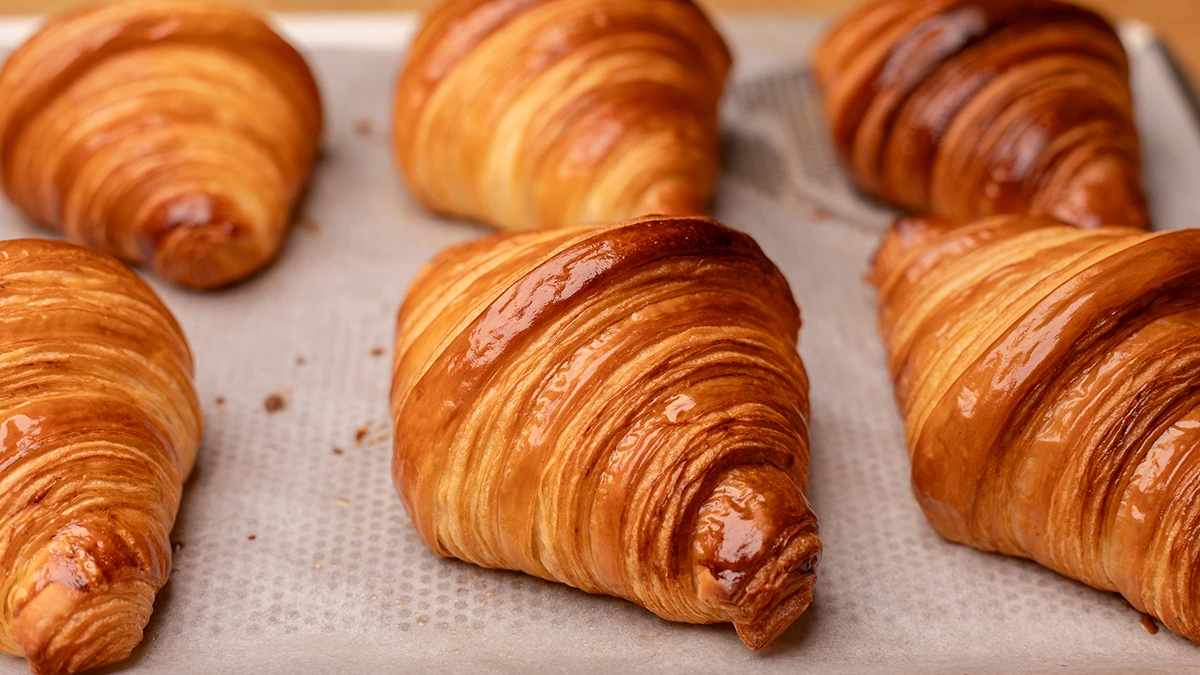
In short: The croissant reached France from Viennese baking and became French there — when yeasted dough was combined with butter and lamination. That combination of crunch, layers and aroma is what turned it into a worldwide classic.
One of the best known bakes there is
Croissants are arguably among the most recognised and best-loved things baked anywhere. Crisp, airy and at the same time soft, these laminated pastries long ago became a classic of French cooking.
The question worth asking is what actually made them so popular, because it was not simply the shape.
From Vienna to Paris
The crescent shape came from the Viennese kipferl, a much plainer baked good. What the French added was the technique: butter laminated through yeasted dough, which produces something the original never resembled.
This is why the croissant is genuinely French despite its Austrian ancestry — the shape was inherited, the substance was invented.
Why it became the benchmark
Because everything shows in it. The dough temperature, the quality of the butter, the accuracy of the rolling, the completeness of the prove — every one of those is visible in the section. There is nowhere to hide a mistake, which is exactly what makes it a measure of a baker.
Industrial versus real
A real croissant is made with butter and given a full prove. Mass-produced versions use margarine and accelerated processes, which is why they look similar and taste nothing alike.
Frequently asked questions
Is the croissant a French invention
The shape came from the Viennese kipferl. Lamination with butter is what made it French.
Why is the croissant seen as a test of skill
Because everything shows in it: dough temperature, butter quality, rolling accuracy and the completeness of the prove.
How does a real croissant differ from a mass-produced one
In ingredients and time. A real one uses butter and a full prove; industrial versions use margarine and speed.