

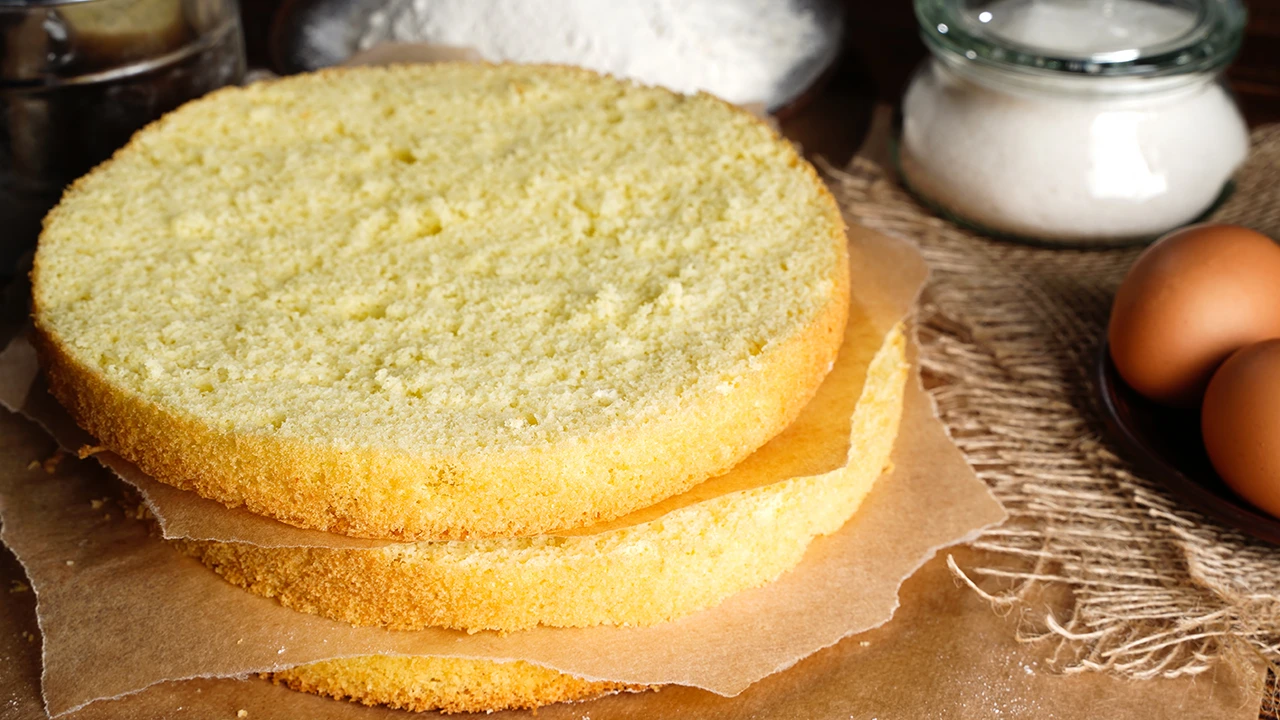
In short: A soak is for dry, dense layers — classic sponge made without butter. Moist layers and cakes with a juicy filling are only harmed by it: the layers slump and the cake loses its shape.
It depends on the build
The balance of layers, filling and soak is what makes a cake work. Syrup can ruin a cake just as easily as it can add a new dimension to it. Judge by the architecture of the dessert, the type of layers and the moisture of the filling.
When to skip the soak
- If you want the layers to stay slightly crisp. Syrup breaks that idea and complicates assembly.
- With a sour cream filling. It already carries plenty of moisture; a soak on top of it is redundant.
- If the base is crêpes. They are thin and soft, and a soak has no place in those recipes.
When a soak helps
With meringue-based or buttercream fillings: those creams carry little moisture themselves, so the layers stay dry without help. Dense sponge baked without butter is the classic candidate.
How much to use
Around 50–70 g of syrup per 18 cm layer, brushed on in two passes so it can absorb between them. Pouring it on in one go leaves the middle wet and the edges dry.
Frequently asked questions
Which layers should not be soaked
Moist and buttery ones — chiffon, honey layers rich in honey — and anything paired with a juicy filling.
How much syrup per layer
Roughly 50–70 g for an 18 cm layer. Brush it on in two passes rather than pouring.
What can I use instead of sugar syrup
Milk, coffee, fruit juice, or syrup with a splash of alcohol. The limit is quantity, not the liquid.