

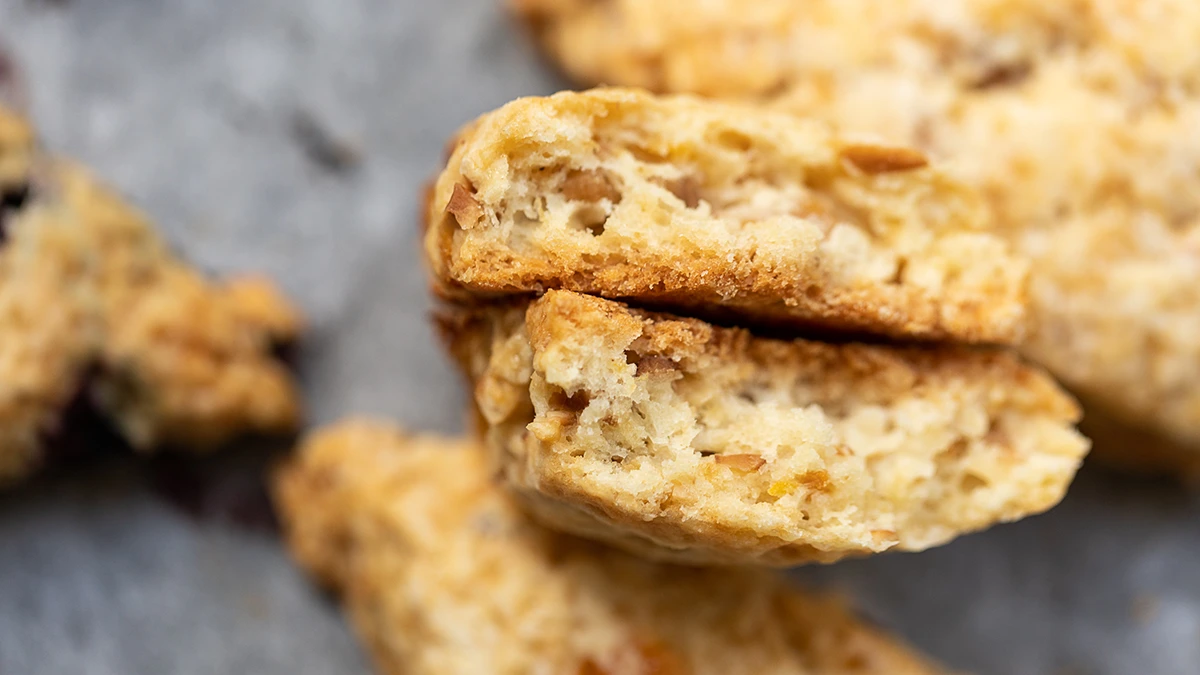
In short: A scone is a quick bake raised with baking powder, somewhere between bread and a biscuit: a crust outside, a layered crumbly interior. The structure comes from cold butter rubbed into the flour as crumbs, and from mixing as little as possible.
Where scones come from
Scones are found in many countries, each with its own history, traditions and recipes refined over time to suit the region.
Their history goes back to the Middle Ages, to Scotland, where they first appeared as a very simple, sustaining food for soldiers and travellers: small round breads cooked on a griddle from flour, salt and water.
Over time the recipe grew more refined. Milk was added, then butter and sugar, and the griddle gave way to the oven.
The method that matters
Cut cold butter into cubes. Mix the flour with sugar, salt and baking powder, then rub the butter in until the pieces are the size of small beans — that irregularity is what produces layers.
Add the liquid and stop mixing the moment the flour is damp. Gluten development is working against you here: the more you mix, the denser the scone.
Shaping and baking
Roll the dough in a bag or between sheets, fold it once and roll again — this builds the layers. Cut into triangles with a scraper or stamp out rounds, and bake straight from cold.
Four variations
Blueberry. The classic sweet version.
Cheese and ham. Parmesan powder in the dry mix, savoury and substantial.
Chocolate with chips. Cocoa in the dry ingredients and chocolate chips folded through.
Apricot and hazelnut. Dried apricots soaked in hot water, dried and diced; hazelnuts toasted first.
Frequently asked questions
Why are my scones dense
The dough was over-mixed. Stop as soon as the flour is damp: gluten works against the texture here.
How cold should the butter be
Straight from the fridge and rubbed to crumbs. Butter that has softened gives a uniform dense crumb instead of layers.
What are scones served with
Classically with clotted cream and jam. Savoury versions with cheese and herbs are served like a bread roll.