

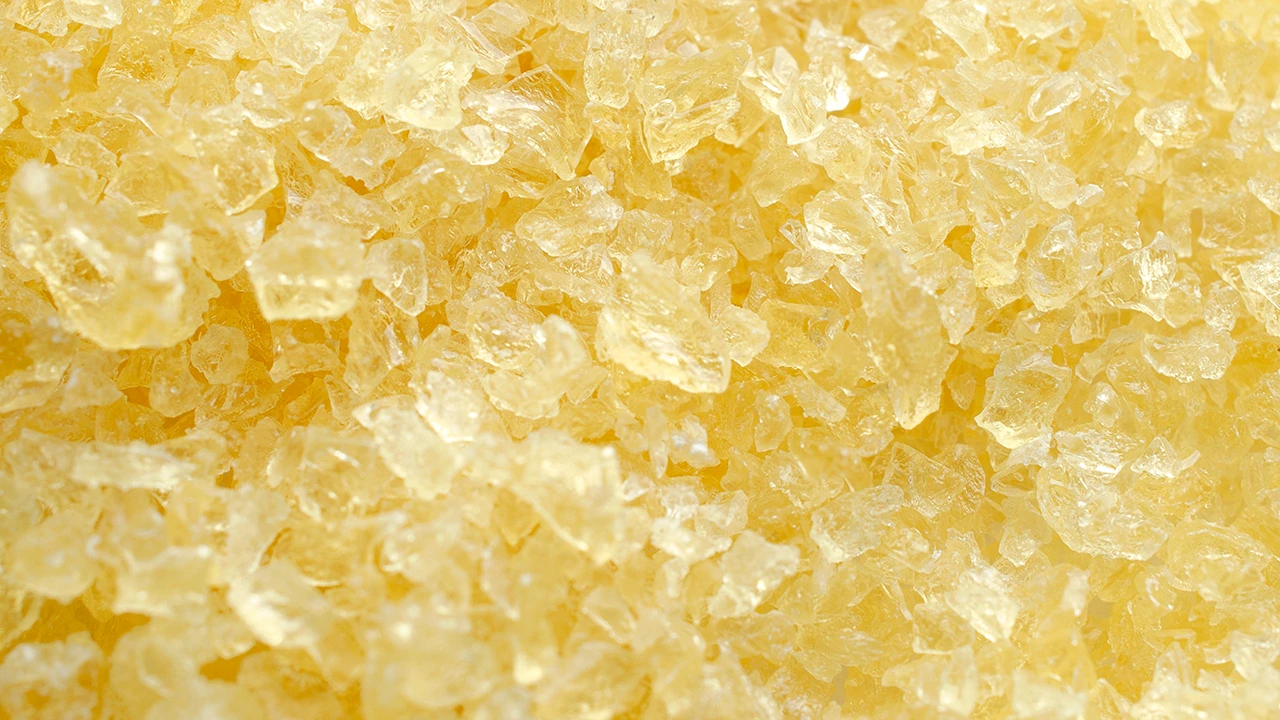
In short: Sheet and powdered gelatin are interchangeable at the same weight. The difference is in preparation: powder is bloomed in a strictly measured amount of water, while sheets are soaked in a bowl and take up exactly as much as they need.
Why gelatin at all
Setting agents come up constantly in pastry work — for fillings, for stabilising marmalade and marshmallow, for mousse desserts. Gelatin is the most popular of them, largely because it is straightforward to use, and it turns up in soufflés, mousses and marshmallows alike.
The practical difference
Powder is poured into the exact quantity of cold water stated on the packet. Get that wrong and the mass either fails to swell evenly or dilutes the dessert.
Sheets have no such constraint: drop them into a bowl of cold water and each sheet absorbs what it needs. Squeeze out the excess before use.
Which to buy
For occasional home work, sheets are more forgiving — no scales needed for the water. For larger batches, powder is more precise and cheaper by weight.
Bloom strength
What actually decides firmness is bloom strength, not the format. Most retail gelatin is 180–200 bloom; if a recipe specifies a figure, match it rather than assuming all gelatin is equal.
What stops gelatin setting
Two things. Overheating above 60 °C destroys its setting power. And fresh pineapple, kiwi and papaya contain enzymes that break gelatin down — with those fruits, either cook them first or use a different setting agent.
Frequently asked questions
Which is better, sheet or powdered gelatin
For occasional home work, sheets: no scales needed for the water. For large batches, powder is more precise.
Can I replace gelatin with agar
Yes, with recalculation: agar is several times stronger and sets at room temperature rather than in the fridge.
Why did my dessert not set
The gelatin was heated above 60 °C, or the recipe contains fresh pineapple, kiwi or papaya, whose enzymes break gelatin down.
Sources
- GELITA. Gelatine — bloom strength and the forms gelatin is supplied in