

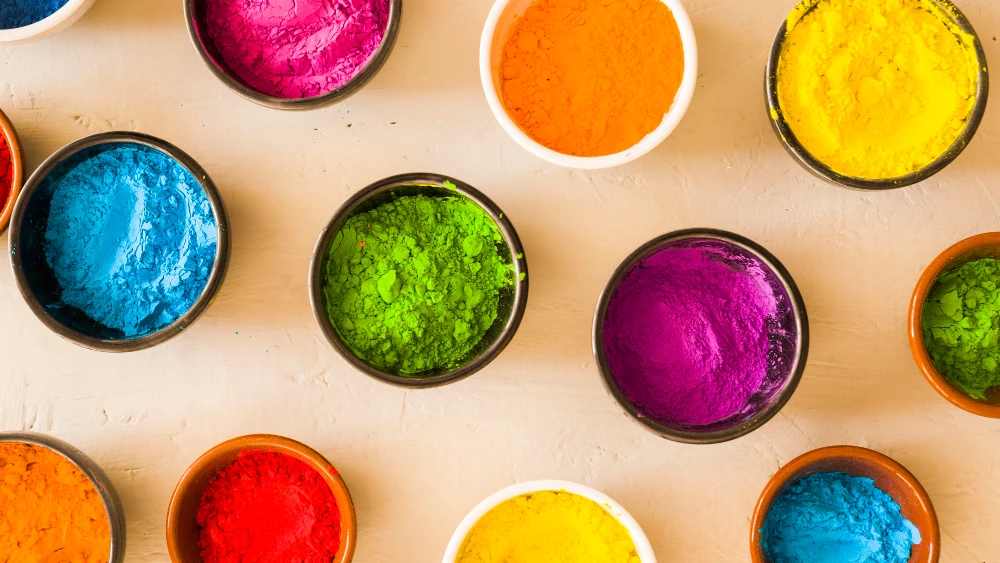
In short: Food colours divide into synthetic and natural, and by format into gel, powder, liquid and fat-soluble. Chocolate and butter-based creams take only fat-soluble colours: a water-based one will seize in fat.
What food colouring is
Not long ago, making brightly coloured desserts required a great deal of ingenuity. Today adding colour is straightforward — but only if you match the colour to the medium.
Chemically, food colours are substances added to food to give it a bright and attractive appearance. They are present in almost everything we eat, usually without our noticing.
Synthetic and natural
Synthetic colours give strong, predictable and stable shades and work in very small quantities.
Natural colours are derived from plants and minerals. Gentler in composition, but weaker, less stable under heat, and they often bring their own flavour with them.
By format
| Format | Where it works | Notes |
|---|---|---|
| Gel | frostings, batters, water-based masses | strong colour without thinning the mixture |
| Powder | dry mixes, macaron shells, dusting | needs dispersing; very concentrated |
| Liquid | drinks, glazes | weakest, and it thins whatever it goes into |
| Fat-soluble | chocolate, buttercream, velvet spray | the only kind that will not seize in fat |
How much to use
The minimum that gives the shade you want, added drop by drop. Too much brings bitterness and changes the texture of the mass — an overdose of colour is visible in the mouth as well as the eye.
Frequently asked questions
Which colour should I use in frosting
Gel for water-based and dairy frostings: strong colour that does not thin the mass. For butter and chocolate, only fat-soluble.
How does gel differ from powder colouring
Gel is ready to use and added by the drop; powder has to be dispersed but gives more intense colour for less volume.
Does colouring affect flavour
Synthetic colours at working doses do not. Natural ones can: beetroot, turmeric and spinach all bring their own taste.
Sources
- EFSA. Food colours — European safety assessment of food colours and what the E numbers mean