

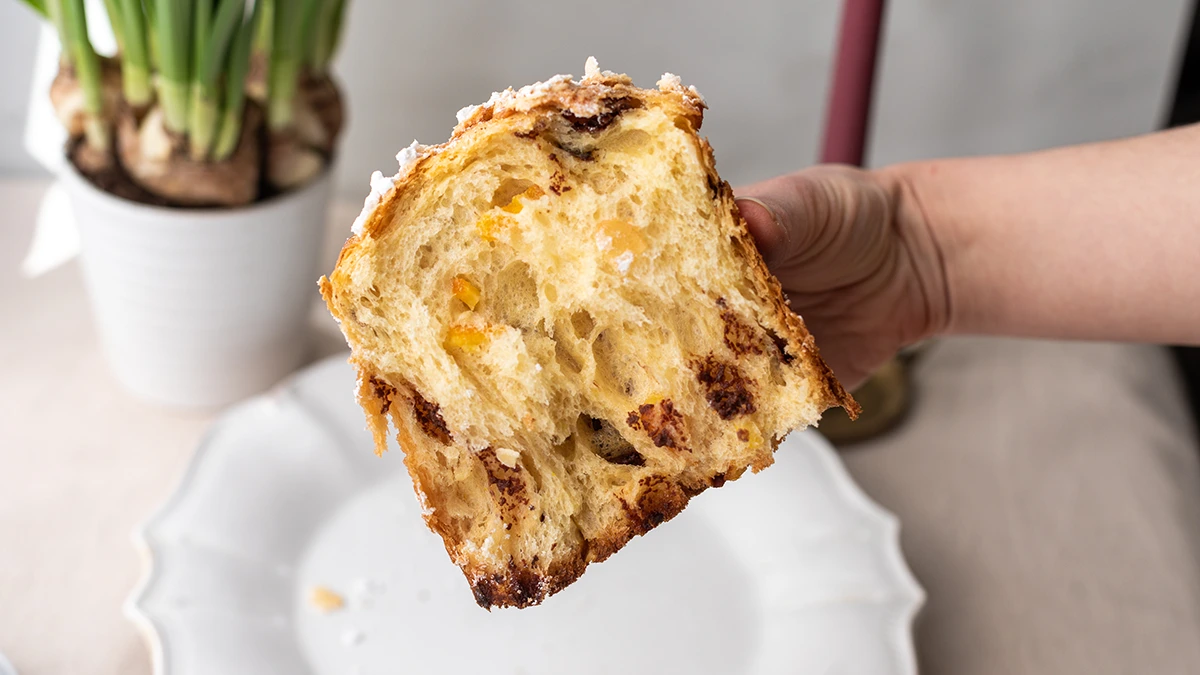
In short: Three icings work for Easter bread: egg white, sugar icing on water or juice, and chocolate. Egg white icing holds best and will not shed, provided you leave it slightly elastic rather than drying it out completely.
Why icing matters here
In the run-up to Easter, baking the traditional loaf is an inseparable part of the preparations — and what better than finishing it with a bright, appetising icing? The icing is what makes the loaf look like an occasion rather than a bread.
Egg white icing
The classic. Whipped egg white with icing sugar and a few drops of lemon juice, taken to soft peaks. It sets into a firm, matte layer that holds sprinkles and does not slide off the dome.
The failure mode is over-drying: taken too far, it becomes brittle and cracks the moment the loaf is cut.
Sugar icing
Icing sugar with water, milk or fruit juice. The simplest of the three and the least stable — thin it too far and it runs off the loaf rather than sitting on it.
Chocolate icing
Melted chocolate, on its own or with a little butter or cream for shine. It sets harder than the others and is the most forgiving in warm rooms.
Without raw egg
Use powdered egg white — albumen. It is pasteurised, gives the same texture, and removes the risk that comes with raw egg in something that is never cooked.
Frequently asked questions
Why does my icing crack and fall off
It was over-dried or made too thick. Properly made icing stays slightly elastic once set.
How do I make icing without raw egg
Use powdered egg white. It is pasteurised and gives the same result without the risk.
How long does icing take to dry
From an hour to several, depending on thickness. Add any decoration before it dries.