

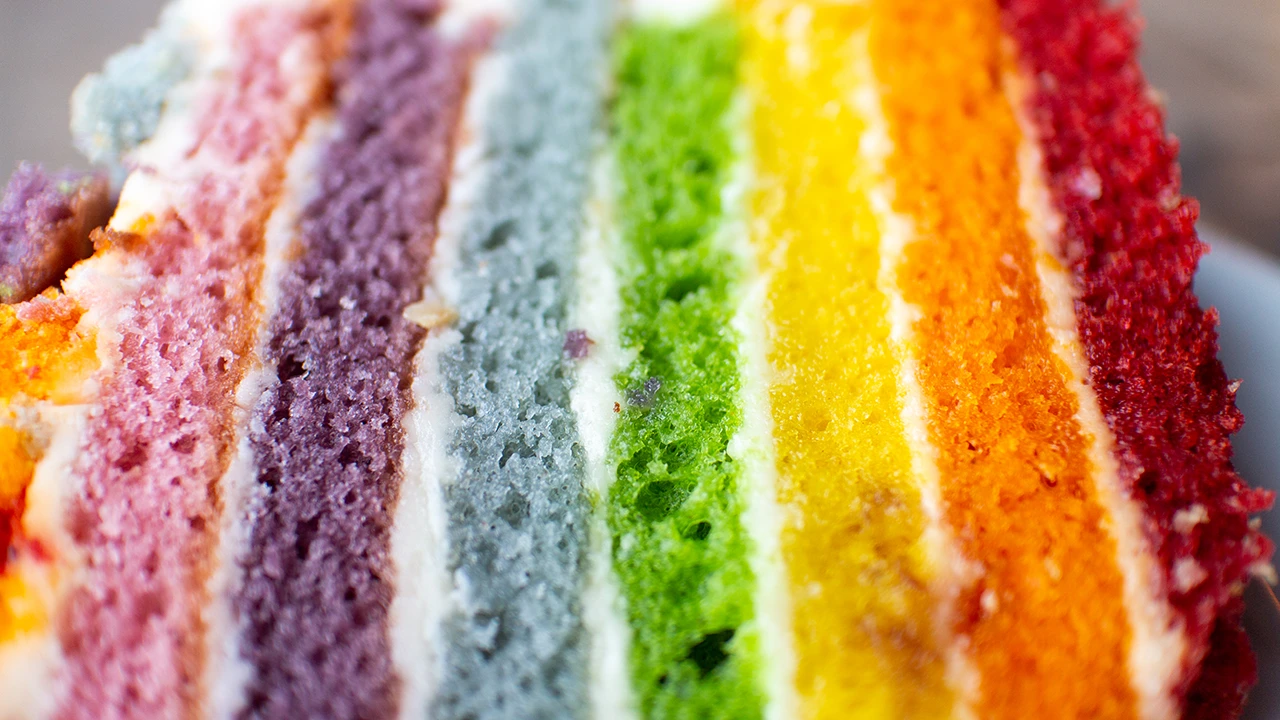
In short: Homemade food colouring is made from the juice of vegetables, fruit and berries: beetroot gives pink, spinach green, turmeric yellow and hibiscus deep red. That juice is watery, so add it carefully — it thins whatever you put it into.
When you need it
If the shade you need is not in the cupboard, there is no reason to panic. A number of fruits and vegetables release strongly coloured juice, and that juice is a perfectly good stand-in.
Because homemade colouring is fairly runny, use it sparingly so you do not ruin the consistency. Overdo it and you also risk giving the finished dessert a distinct smell and aftertaste.
What gives which colour
| Source | Colour | Notes |
|---|---|---|
| Beetroot | pink to deep red | fades noticeably with heat |
| Spinach | green | blanch and blend, then strain |
| Turmeric | yellow to orange | very strong; holds up to baking |
| Hibiscus | crimson | brew strong and reduce |
| Activated charcoal | grey to black | no flavour, holds up to heat |
The main advantage
The obvious benefit is composition: no synthetic additives, which matters for children and for anyone avoiding them. The trade-off is muted colour and less predictable behaviour under heat.
How to avoid thinning the mixture
Reduce the juice to a concentrate before adding it, or use a dried powder instead. Freeze-dried fruit ground to powder is the strongest option and adds no water at all.
Frequently asked questions
Which produce gives the strongest colour
Beetroot, spinach, turmeric, hibiscus and activated charcoal. Berry juices give paler shades.
Why does homemade colouring loosen my frosting
Because it is juice, which is mostly water. Reduce it first or switch to a dried powder.
Does the colour survive baking
Partly. Beetroot and berries fade with heat; turmeric and charcoal hold up much better.